

Download full report and data
The Australian Crop Report contains ABARES forecasts for the area, yield and production of Australia’s major winter and summer broadacre crops. Forecasts are made at the Australian state level.
Download the full report
- Australian Crop Report: March 2026 No. 217 (PDF - 642 KB)
- Australian Crop Report: March 2026 No. 217 (Word - 4.7 MB)
Download the data
Key points
- Summer crop production forecast to fall by 14% in 2025–26 to 4.5 million tonnes, reflecting mixed seasonal conditions across key summer cropping regions.
- National winter crop production expected to increase by 13% to 68.4 million tonnes in 2025–26, 15% above the five-year average to 2024–25 and the second largest winter crop on record.
- Winter crop harvest results indicate that yields were higher than expected, particularly in Western Australia and Victoria where total winter crop production has been revised up 2% and 11% respectively from the December 2025 forecast.
Summer crop production impacted by lower irrigation water availability and a hot and dry summer
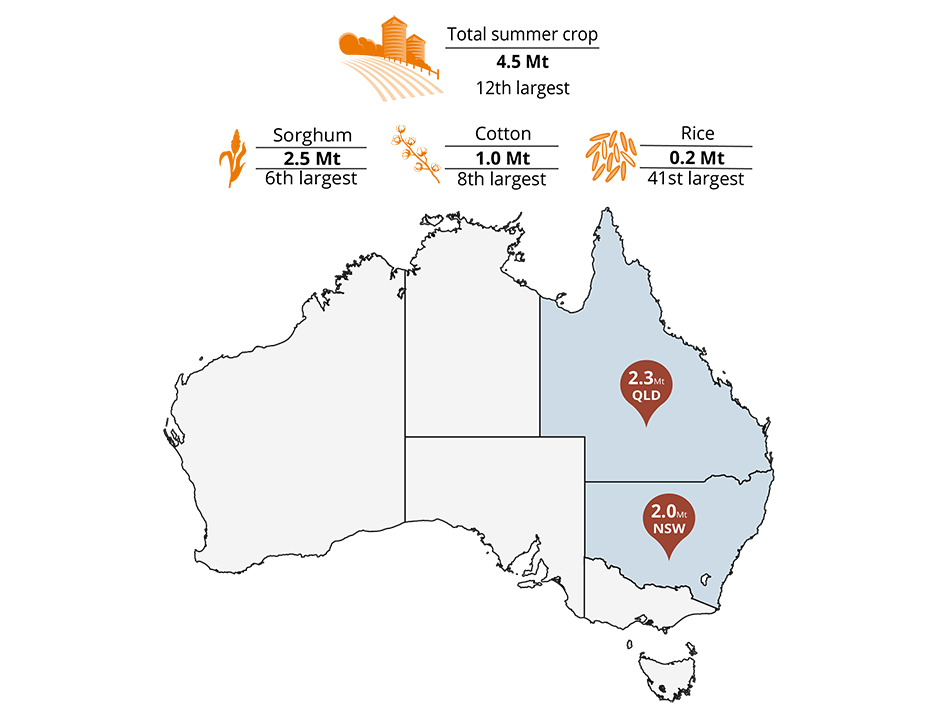
Summer crop production is forecast to fall by 14% to 4.5 million tonnes in 2025–26 (Figure 1), 7% below the 5-year average to 2024–25. Total summer crop production is largely unchanged from the December 2025 Australian Crop Report, due to offsetting revisions in individual commodities.
Area planted to summer crops in 2025–26 is estimated to have decreased by 3% to 1.3 million hectares, reflecting lower irrigation water allocations and increased water prices in some regions and below average soil moisture levels later in the planting window.
Sorghum production is forecast to fall by 6% to 2.5 million tonnes in 2025–26, still 7% above the five-year average to 2024–25. Despite an estimated 11% increase in total area planted to sorghum and average soil moisture levels at the start of the planting window, below average summer rainfall and well above average temperatures have limited yields. Average yields are estimated to be down 16% compared to 2024–25, but are still close to the five-year average to 2024–25.
Production of cotton lint is forecast to fall by 17% to 1 million tonnes in 2025–26, reflecting both lower area and lower yields. Area planted to cotton is forecast to fall by 12% to 455 thousand hectares in 2025–26 to sit 9% below the 5-year average 2024–25. The reduction in planted area reflects falls in both New South Wales and Queensland. Average yields are expected to fall from near record levels in 2024–25. Variable water availability and rainfall across much of eastern Australia has led to a 6% fall in yield. Despite this, aggregate yields are expected to be 2% above the 5-year-average to 2024–25.
Rice production is forecast to fall by 66% to 178 thousand tonnes in 2025–26, as a result of a decline in area planted in New South Wales. The fall in area planted was driven by a reduction in general security water allocations, and an increase in irrigation water prices.
Figure 1 Australian summer crop production, 2025–26
Source: ABARES
2025–26 winter crop second largest on record
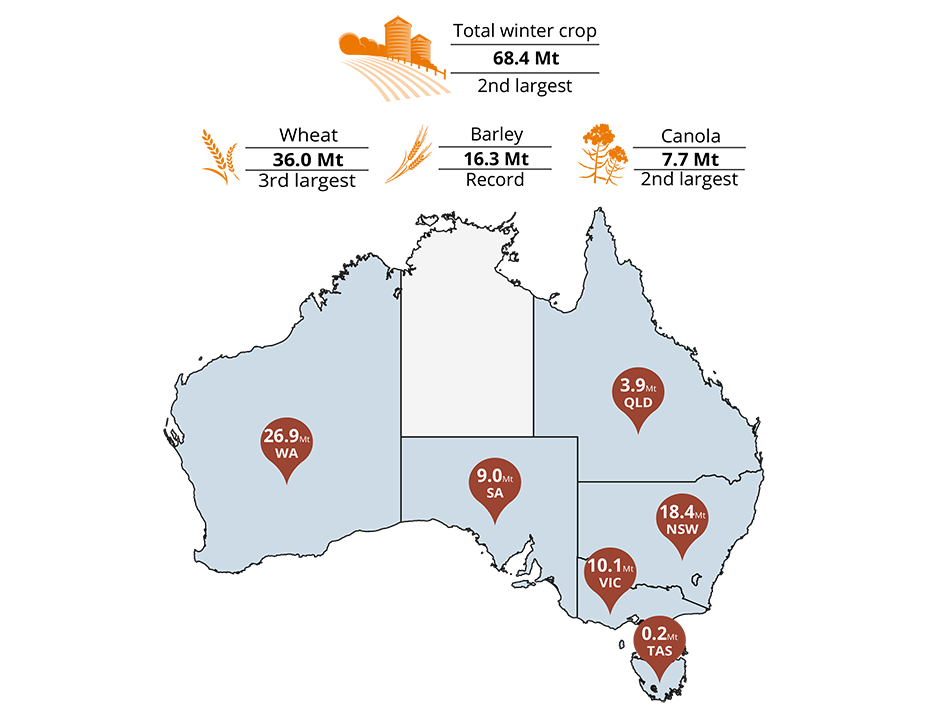
Australian winter crop production is estimated to have increased by 13% to 68.4 million tonnes in 2025–26 (Figure 2). This is 15% above the 5-year average to 2024–25 of 59.5 million tonnes and is the second highest result on record. While national winter crop production is estimated to increase overall, conditions were mixed across Australian winter cropping regions.
- Despite a dry start in Western Australia, crop prospects improved significantly throughout the season, with average to very much above average rainfall received from July to November. Above average rainfall, together with mild spring conditions have resulted in record average winter crop yields, with production now estimated to have surpassed the previous record by over 600 thousand tonnes.
- Seasonal conditions in Queensland were mostly favourable, with winter crop production now estimated to have exceeded the previous year’s record by 2%, reflecting a 4% increase in the area planted combined with well above average yields.
- Winter crop production in South Australia and Victoria is now expected to be slightly above the five-year average to 2024–25, despite challenging seasonal conditions. Many crops were dry sown with persistent dry conditions throughout autumn. July rainfall enabled good emergence and despite a dry start to spring, falls in October and November were perfectly timed, providing enough moisture for crops at critical growth stages. Mild spring temperatures and a lack of frost events have resulted in crop yields being much better than expected in many regions.
- In New South Wales, winter crop production is estimated to have fallen by 10%, reflecting both a fall in the areas planted and lower winter crop yields. Favourable conditions in parts of central and northern New South Wales have been more than offset by well below average conditions across southern New South Wales.
- Despite challenging conditions in many major cropping regions, the strong outcome reflects improved farming practices that conserve soil moisture and improve water use efficiency, together with advancements in seed varieties.
Figure 2 Australian winter crop production, 2025–26
Source: ABARES
National winter crop production has been revised up 3% from the December 2025 Australian Crop Report. The increase reflects upward revisions for all states, particularly Victoria and Western Australia.
- Wheat production is estimated to increase by 5% to just under 36 million tonnes in 2025–26, 7% above the five-year average to 2024–25. A 5% decrease in the area planted is estimated to have been offset by above average yields.
- Barley production is estimated to increase by 23% to a record 16.3 million tonnes in 2025–26, 21% above the five-year average to 2024–25. This reflects an estimated 3% increase in area planted and well above average national barley yields.
- Canola production is estimated to increase by 20% to 7.7 million tonnes in 2025–26, the second largest canola crop on record, driven by an 8% increase in total area planted and above average yields.
- Lentil production is estimated to increase by 60% to a record 2 million tonnes in 2025–26, reflecting a 10% increase in the area planted and yields returning to average levels after last year’s drought affected yields in major growing regions of South Australia and Victoria.
- Chickpea production is estimated to be down 4% at 2.2 million tonnes in 2025–26, despite an 8% increase in the area planted Yields are estimated to be down 11% from last year’s record level, but still 23% above the five-year average, with production estimated to be the second highest on record.
Area planted to winter crops in 2025–26 is estimated to have increased slightly to a new national record of 25.2 million hectares, driven by an increase in the area planted in Queensland, South Australia and Western Australia. This was partially offset by a fall in the area planted in New South Wales and Victoria.
Crop forecasts by state
Summer crop production in Queensland is forecast to fall by 9% to 2.3 million tonnes in 2025–26. This is 3% above the five-year average to 2024–25 and broadly consistent with December 2025 Australian Crop Report.
The area planted to summer crops in Queensland is estimated to rise by 5% to 704 thousand hectares in 2025–26 and sits 2% above the five-year average to 2024–25. Higher cropping area largely reflects greater area planted to sorghum, due to relatively high prices and favourable conditions at planting. In contrast, lower irrigation water availability is estimated to have led to a 11% decline in the area planted to cotton.
Sorghum production is forecast to fall by 8% to 1.7 million tonnes in 2025–26. Sorghum yields are forecast to be lower than 2024–25 and more than offset increases in area planted. Expected lower yields reflect less favourable conditions in November and December for southern cropping regions. Above average rainfall in January 2026 is expected to support increased planting in Central Queensland.
Cotton lint production is forecast to fall by 18% to 335 thousand tonnes in 2025–26, driven by a decline in planted area and lower yields. Area planted to cotton is estimated to fall by 11% to 144 thousand hectares in 2025–26, as lower water availability is expected to drive lower irrigated cotton planting. Yields are expected to fall in 2025–26 given relatively unfavourable conditions but remain similar to the five-year average to 2024–25.
| Crop | Area '000 ha | Yield t/ha | Production kt | Area change % | Prod. change % |
|---|---|---|---|---|---|
| Grain sorghum | 450 | 3.72 | 1,675 | 11.1 | –8.5 |
| Cotton lint | 144 | 2.33 | 335 | –11.1 | –18.2 |
| Cottonseed | 144 | 2.67 | 384 | –11.1 | –18.2 |
Note: Yields are based on area planted, except cotton which is based on area harvested. Area includes planted crop that is harvested, fed off or failed. Percent changes are relative to 2024–25.
Source: ABARES
Winter crop production in Queensland is estimated to increase by 2% to reach 3.9 million tonnes in 2025–26, the highest production level on record. This is 32% above the five-year average to 2024–25 of 2.95 million tonnes and represents a 4% upward revision from the December 2025 Australian Crop Report. This upward revision is largely attributed to higher wheat and chickpea production than previously forecast. The overall increase in winter crop production reflects a year-on-year expansion in chickpea area and above average yields for most major winter crops, supported by timely rainfall and average to above-average soil moisture levels at planting and during the growing season.
Queensland wheat production is estimated to increase by 4% to 2.3 million tonnes in 2025–26, with average state yield 23% above the five-year average to 2024–25. Barley production is estimated to fall by 4% to 515 thousand tonnes, with average state yield 16% above the five-year average to 2024–25. Chickpea production is estimated to increase by 3% to 975 thousand tonnes in 2025–26, the second highest level on record. Area planted to chickpeas is estimated to have increased by 20% in 2025–26, supported by favourable seasonal conditions and relatively stable chickpea prices at the start of the season.
| Crop | Area '000 ha | Yield t/ha | Production kt | Area change % | Prod. change % |
|---|---|---|---|---|---|
| Wheat | 880 | 2.63 | 2,310 | –2.2 | 3.6 |
| Barley | 175 | 2.94 | 515 | –5.4 | –3.7 |
| Chickpeas | 505 | 1.93 | 975 | 20.2 | 2.6 |
Note: Yields are based on area planted. Area includes planted crop that is harvested, fed off or failed. Percent changes are relative to 2024–25.
Source: ABARES
Summer crop production in New South Wales is forecast to fall by 21% to 2.0 million tonnes in 2025–26, 16% below the five-year average to 2024–25. The fall largely reflects a fall in the area planted to cotton and rice and lower sorghum yields. Total area planted to summer crops in 2025–26 is estimated to be down 11% at 600 thousand hectares.
Sorghum production is forecast to fall slightly to 840 thousand tonnes in 2025–26, despite an 11% increase in the area planted. Below average December and January rainfall combined with extreme temperatures in January impacted sorghum yields, which are estimated to be down 11% year-on-year and 3% below the five-year average to 2024–25.
Cotton lint production is forecast to fall by 18% to 641 thousand tonnes in 2025–26. The area planted to cotton is forecast to fall by 13% to 292 thousand hectares in 2025–26, driven by drier conditions and below average water availability across southern cropping regions. Northern cropping regions were supported by above average water availability across Gwydir, Namoi and the Macquarie Valley and favourable soil moisture levels. Yields are expected to fall from 2024–25 levels but remain close to the five-year average to 2024–25.
Rice production is forecast to fall by 66% to 175 thousand tonnes in 2025–26, driven by a 64% reduction in the area planted, the smallest area planted since 2019–20. Reduced general security water allocations and elevated water prices have led to lower rice plantings.
| Crop | Area '000 ha | Yield t/ha | Production kt | Area change % | Prod. change % |
|---|---|---|---|---|---|
| Grain sorghum | 200 | 4.20 | 840 | 11.0 | –1.2 |
| Cotton lint | 292 | 2.20 | 641 | –13.2 | –18.0 |
| Cottonseed | 292 | 2.52 | 735 | –13.2 | –18.0 |
| Rice | 17 | 10.29 | 175 | –63.8 | –66.3 |
Note: Yields are based on area planted, except cotton which is based on area harvested. Area includes planted crop that is harvested, fed off or failed. Percent changes are relative to 2024–25.
Source: ABARES
Winter crop production in New South Wales is forecast to fall 10% to 18.4 million tonnes in 2025–26, the fourth highest on record and broadly consistent with December 2025 Australian Crop Report. Seasonal conditions have been highly variable across New South Wales, with favourable conditions resulting in above average yield outcomes in northern cropping regions which was offset by below average growing season rainfall and disappointing yield outcomes throughout southern New South Wales.
Wheat production in New South Wales is expected to decrease by 13% to 11.2 million tonnes in 2025–26, with the average state yield forecast to be down 6% year-on-year but still 4% above the five-year average to 2024–25. Barley production is expected to be down 3% at 3.3 million tonnes and canola down 16% at 1.6 million tonnes. Chickpea production is forecast to fall by 8% to 1.2 million tonnes in 2025–26, with a 9% drop in yields offsetting a 2% increase in the area planted. Despite mostly favourable seasonal conditions, chickpea yields have been below expectations in many northern cropping regions but are still significantly higher than average, with production expected to be the second highest on record.
The area planted to winter crops in New South Wales is estimated to have decreased by 4% to 6.8 million hectares in 2025–26, still the third highest on record and 6% above the five-year average to 2024–25.
| Crop | Area '000 ha | Yield t/ha | Production kt | Area change % | Prod. change % |
|---|---|---|---|---|---|
| Wheat | 3,600 | 3.11 | 11,200 | –7.7 | –13.2 |
| Barley | 1,000 | 3.30 | 3,300 | 0 | -2.9 |
| Canola | 950 | 1.68 | 1,600 | –4.0 | –15.8 |
| Chickpeas | 590 | 2.00 | 1,180 | 1.7 | –7.8 |
Note: Yields are based on area planted. Area includes planted crop that is harvested, fed off or failed. Percent changes are relative to 2024–25.
Source: ABARES
Winter crop production in Victoria is estimated to have increased by 30% to 10.1 million tonnes in 2025–26, the third highest on record. This represents a 11% upward revision from the December 2025 Australian Crop Report and now sits 4% above the five-year average to 2024–25 of 9.7 million tonnes. This near record harvest reflects continued high area planted to winter crops and average yields.
Following a very dry start to the winter cropping season, favourably timed rainfall events during winter and spring saw growing conditions improve, especially across the western and southern cropping regions of Victoria. Despite below average rainfall during August and September 2025, a combination of factors including: above average rainfall in October and November; cooler temperatures in November and December; increased water use efficiency; and minimal frosting events — favoured the later planted crop and resulted in higher yields than initially forecasted. The better-than-expected harvest results can also be attributed to improved farming practices and advancements in seed varieties.
Harvest activity was prolonged in some central and southern regions of Victoria due to wet conditions recorded in November 2025. Given wet harvest conditions, overall quality was reportedly mixed across all grains, oilseeds and pulses.
Wheat production in Victoria is estimated to have increased by 21% to 4.3 million tonnes in 2025–26. Barley production is estimated to have increased by 55% to 3.1 million tonnes, following an increase in the area planted and a cool finish that favoured yields. Despite an estimated fall in area, canola production is expected to increase to 1.3 million tonnes to the fourth highest level on record. Lentil production is estimated to have reached a new record of 925 thousand tonnes, driven by increased area and yields.
| Crop | Area '000 ha | Yield t/ha | Production kt | Area change % | Prod. change % |
|---|---|---|---|---|---|
| Wheat | 1,470 | 2.89 | 4,250 | –2.0 | 21.4 |
| Barley | 850 | 3.65 | 3,100 | 3.7 | 55.0 |
| Canola | 540 | 2.31 | 1,250 | –5.3 | 4.2 |
| Lentils | 530 | 1.75 | 925 | 1.9 | 42.3 |
Note: Yields are based on area planted. Area includes planted crop that is harvested, fed off or failed. Percent changes are relative to 2024–25.
Source: ABARES
Winter crop production in South Australia is estimated to increase by 68% to just below 9 million tonnes in 2025–26, reflecting timely spring rainfall at critical growth stages and mild spring temperatures. This is 5% higher than what was forecast in the December 2025 Australian Crop Report, with upward revisions made to both canola and barley production.
Despite a very dry start to the winter cropping season, July rainfall allowed dry sown crops to emerge and get well established through winter. Despite a dry start to spring, October rainfall supported crops that had emerged late and provided moisture at a critical growth stage. Further rainfall in November, combined with mild spring and early summer temperatures provided ideal finishing conditions. This year has again highlighted that farming practices that conserve moisture and improve water use efficiency together with advancements in seed varieties have allowed for surprisingly high yields despite below average to average growing season rainfall.
South Australian wheat production is estimated to increase by 71% in 2025–26, to 4.7 million tonnes, with the average state yield 3% above the five-year average to 2024–25. Barley production is estimated to increase by 65% to 2.1 million tonnes. Lentil production is estimated to be up 78% year- on-year at a record 989 thousand tonnes, reflecting a 10% increase in the area sown and close to average yields. Canola production is up by 46% at 550 thousand tonnes, with canola yields across the southeast cropping region benefiting from the mild spring.
| Crop | Area '000 ha | Yield t/ha | Production kt | Area change % | Prod. change % |
|---|---|---|---|---|---|
| Wheat | 2,000 | 2.37 | 4,740 | –2.4 | 71.1 |
| Barley | 835 | 2.57 | 2,146 | 3.1 | 65.1 |
| Lentils | 515 | 1.92 | 989 | 9.6 | 78.3 |
| Canola | 250 | 2.20 | 550 | –7.4 | 45.5 |
Note: Yields are based on area planted. Area includes planted crop that is harvested, fed off or failed. Percent changes are relative to 2024–25.
Source: ABARES
Winter crop production in Western Australia is estimated to have increased by 17% to 26.9 million tonnes in 2025–26, which is a new record production. This represents a 2% upward revision from the December 2025 Australian Crop Report and now sits at 29% above the five-year average to 2024–25 of 20.8 million tonnes. This record harvest reflects an expansion in area planted to winter crops and above average yields.
Following a dry start to the winter cropping season, favourably timed rainfall events during July and August saw growing conditions improve significantly, especially across northern and southern cropping regions. Mild spring temperatures supported favourable growing conditions. The combination of above average rainfall and mild spring temperatures resulted in higher yields than initially forecast. The better-than-expected harvest results can also be attributed to improved farming practices and advancements in seed varieties.
Overall, the quality profile of the Western Australian wheat crop was heavily weighted to lower protein grades. Despite the mild spring temperatures supporting grain fill periods, low soil moisture levels in the central growing regions meant that wheat crops in these areas failed to fill grain fully, leading to high levels of screenings.
Wheat production in Western Australia is estimated to have increased by 6% to 13.4 million tonnes in 2025–26, now sitting 18% above the five-year average to 2024–25. Barley production is estimated to have reached a new record of 7.2 million tonnes, driven by increased area planted and record yields. Canola production is estimated to have increased to 4.3 million tonnes to be the second highest result on record.
| Crop | Area '000 ha | Yield t/ha | Production kt | Area change % | Prod. change % |
|---|---|---|---|---|---|
| Wheat | 4,450 | 3.01 | 13,400 | –5.3 | 5.9 |
| Barley | 1,900 | 3.79 | 7,200 | 5.6 | 20.0 |
| Canola | 1,950 | 2.18 | 4,250 | 21.9 | 46.6 |
| Lupins | 400 | 2.30 | 920 | 14.3 | 57.3 |
Note: Yields are based on area planted. Area includes planted crop that is harvested, fed off or failed. Percent changes are relative to 2024–25.
Source: ABARES