Djelk Women Rangers
The Djelk Women Rangers are recognised for their remarkable contribution to Australian biosecurity through Indigenous-led shorebird surveillance, environmental stewardship and the protection of Country. Based in Maningrida and supported by Bawinanga Homelands Aboriginal Corporation, the Women Rangers represent more than 102 clans and 12 language groups across Arnhem Land. Through their leadership, Indigenous ecological knowledge and commitment to on-Country monitoring, they are helping strengthen Australia’s preparedness for emerging biosecurity threats while supporting cultural knowledge, community wellbeing and biodiversity conservation.
Operating across more than 14,000 square kilometres of Arnhem Land and the Arnhem Marine Park, the Women Rangers undertake nationally significant surveillance of migratory shorebirds along one of Australia’s most important biosecurity frontiers. Northern Australia lies along major migratory bird pathways linking Australia with Asia and the Pacific, making the region strategically important for detecting emerging disease risks, including avian influenza. Through regular monitoring at remote coastal sites, wetlands and islands, the Women Rangers provide valuable information that supports national biosecurity preparedness and environmental surveillance efforts.
By combining cultural authority, Traditional Owner knowledge and scientific monitoring practices, the Women Rangers deliver a unique approach to biosecurity surveillance. Their long-term presence on Country provides local insight and continuity that strengthens understanding of disease risks and environmental change across northern Australia. Monitoring at locations such as Second Island Lighthouse near Maningrida Harbour contributes to an early-warning capability for unusual bird health events and emerging biosecurity threats, supporting preparedness for avian influenza and other transboundary animal diseases.
The Women Rangers also strengthen biosecurity through community engagement, cultural governance and knowledge sharing. Traditional Owners, Elders, Sea Rangers and community members contribute local observations that help identify priority monitoring areas and inform surveillance activities. At the same time, the program supports intergenerational learning and leadership development, with younger women gaining experience through on-Country training, mentorship and internships linked to the Learning on Country Program. This approach helps build future biosecurity capability while ensuring cultural knowledge and local expertise continue to inform environmental monitoring and stewardship.
Through their sustained commitment, the Djelk Women Rangers are strengthening environmental protection and biosecurity resilience for Arnhem Land and Australia. Their work demonstrates the vital role of Indigenous leadership in protecting Country, supporting communities and delivering ongoing national biosecurity outcomes.
Watch a video about their work
Introduction
This is the accessible text transcript of the 2026 Australian Biosecurity Awards winner video featuring Djelk Women Rangers: Joyce Bohme, Noreen Wurrkidji, Maxlyn Fry and Germaina Davis.
Transcript
Joyce Bohme: My name is Joyce Bohme, I come from Maningrida, my tribe is Dalabon, I work for the Djelk Women Ranger, I am the Women Rangers coordinator, and this is my team.
Noreen Wurrkidji: My name is Noreen Wurrkidji and I’m the leader for the Women Rangers. My language is Kune and Kunwinjku. I started working with the Rangers in 2024. I come through the Learning on Country Program.
Maxlyn Fry: Hi, my name is Maxlyn Fry and I’m Djelk Women Ranger.
Germaina Davis: Hi, my name is Germaina Davis and I’m a Djelk Women Ranger.
Joyce Bohme: The work that we do with biosecurity we love so much.
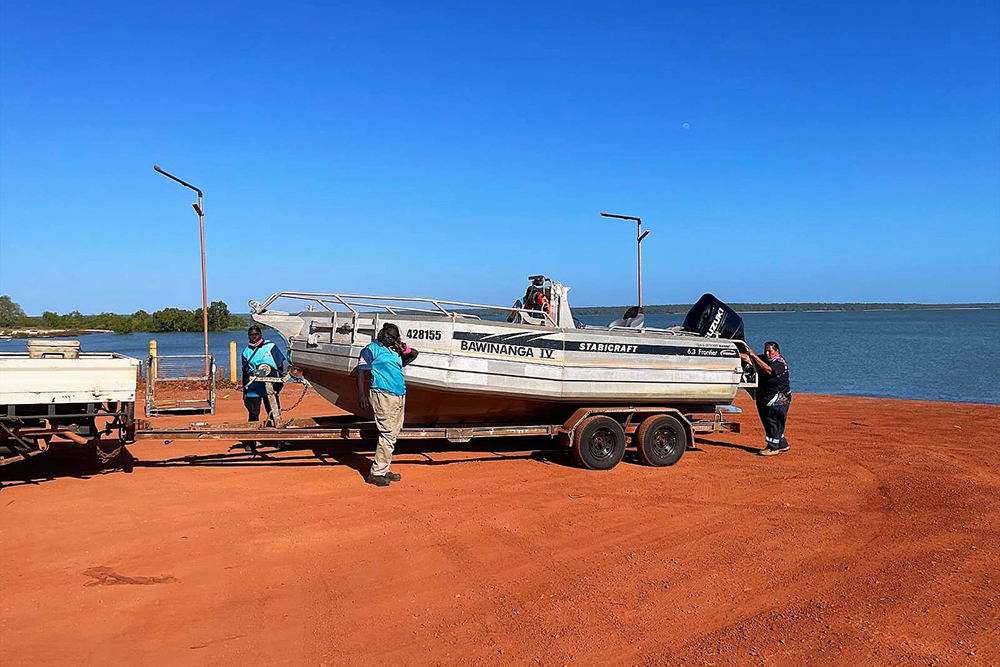
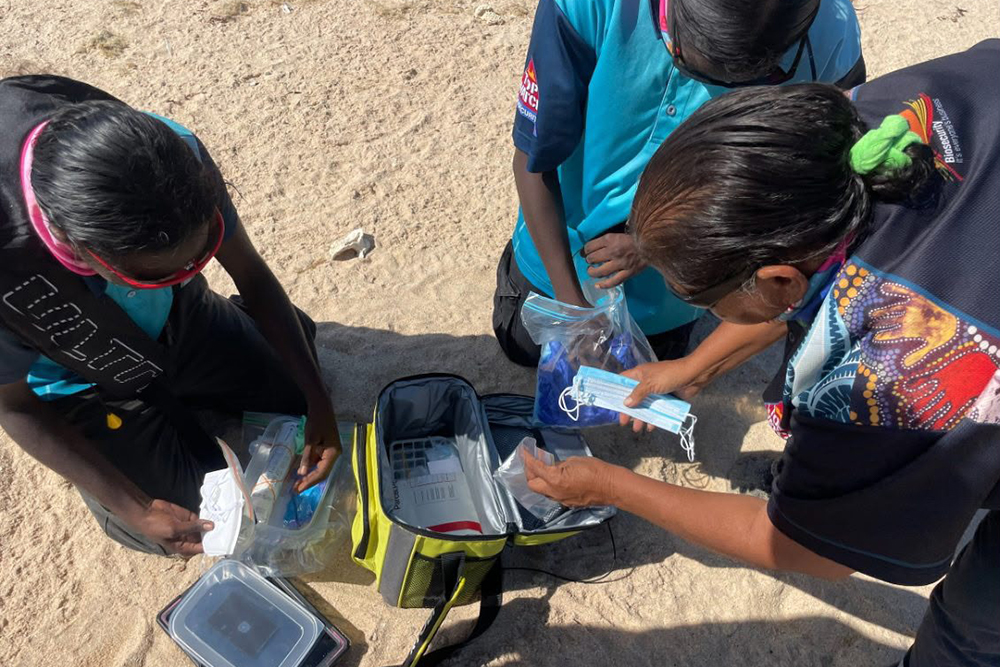
On the day that when we get ready we get the boat prepared so we’ve got two skippers. One of them is Maxlyn and the other one is Noreen so all us ladies get on the boat and then we head out to this island called Ngardagu where we collect all the bird virus poo specimen. Because we know of that island, it’s a migratory island where we have so many shore birds and other birds that migrate on the island. We go out and do these tests every month just making sure that we are safe from the virus.
My job is, I love to teach them in their own language because we all speak in different language. Speaking in Bininj, building up that relationship because we are all different tribes. But once I’ve done that, and we’ve become a family, a team. We can understand each other even though we speak three, four different languages, we can communicate in that language and that’s how I teach in the Bininj way, is learning, speaking their language so that we can speak the language together and learn. But we do learn everything, like on paper, the work that we have to do but I teach it in Bininj way and that’s what I think it makes it feel, the ladies feel happy about it, it’s not all, you know, in really hard words for them to understand but as we break it down, the communication comes easier, easier for them to understand and for the work, what they have to do, it’s easier for them to do it knowing that we, you know, we communicate in that Bininj language.
I went on and on, didn’t I?
Photos