Gunditj Mirring Traditional Owners Aboriginal Corporation
Protecting Country through Indigenous-led environmental management is central to Gunditj Mirring Traditional Owners Aboriginal Corporation's contribution to Australia's biosecurity system. Through innovative partnerships, long-term stewardship and a commitment to restoring ecological balance, the organisation has delivered significant environmental and biosecurity outcomes while creating new opportunities for Indigenous leadership in landscape-scale pest management.
The organisation's work is centred on the Budj Bim Cultural Landscape on Gunditjmara Country in south-western Victoria. Comprising of Budj Bim National Park and adjoining Gunditjmara-owned Indigenous Protected Areas, the landscape contains one of the world's oldest and most extensive aquaculture systems and was inscribed on the UNESCO World Heritage List in 2019. For more than 6,600 years, Gunditjmara people have maintained a sophisticated network of channels, weirs and dams constructed from the basalt lava flows of the ancient Budj Bim volcano. Today, the landscape remains a powerful demonstration of cultural ingenuity, environmental stewardship and enduring connection to Country.
Recognising the threat posed by feral pigs to this culturally and environmentally significant landscape, Gunditj Mirring, with support from partners, led a coordinated initiative to protect native ecosystems, cultural heritage sites, waterways and agricultural land. By bringing together Traditional Owners, government agencies, researchers and local stakeholders, the organisation developed and implemented a strategic management program that combined Traditional Owner knowledge with contemporary monitoring and control techniques.
Through sustained effort and collaboration, the program achieved a reduction of more than 90% in feral pig activity across key project sites. This delivered substantial benefits for native vegetation, wetlands and culturally significant locations, while reducing risks to neighbouring agricultural enterprises and supporting broader environmental biosecurity objectives.
Beyond the environmental outcomes, the initiative demonstrated the value of Indigenous leadership in addressing complex biosecurity challenges. By placing Traditional Owners at the centre of planning, decision-making and implementation, Gunditj Mirring strengthened Indigenous participation in environmental management and created a model for collaborative biosecurity action. The project also strengthened partnerships between Indigenous communities, government, industry and research organisations, building capability and supporting long-term stewardship of culturally and environmentally significant landscapes.
Through its leadership, innovation and commitment to Caring for Country, Gunditj Mirring Traditional Owners Aboriginal Corporation has delivered lasting environmental and biosecurity benefits. Its work demonstrates how Indigenous leadership can strengthen Australia's biosecurity system while protecting cultural heritage, restoring ecosystems and supporting resilient landscapes for future generations.
Watch a video about their work
Introduction
This is the accessible text transcript of the 2026 Australian Biosecurity Awards winner video featuring Stacey Koprdova and Brad Williams, Invasive Species Officers with the Gunditj Mirring Traditional Owners Aboriginal Corporation.
Transcript
Ngata (hello) from Gunditjmara Country.
Brad Williams: G’day guys, my name’s Brad Williams. I’m a proud Wiradjuri man and Gunditjmara man.
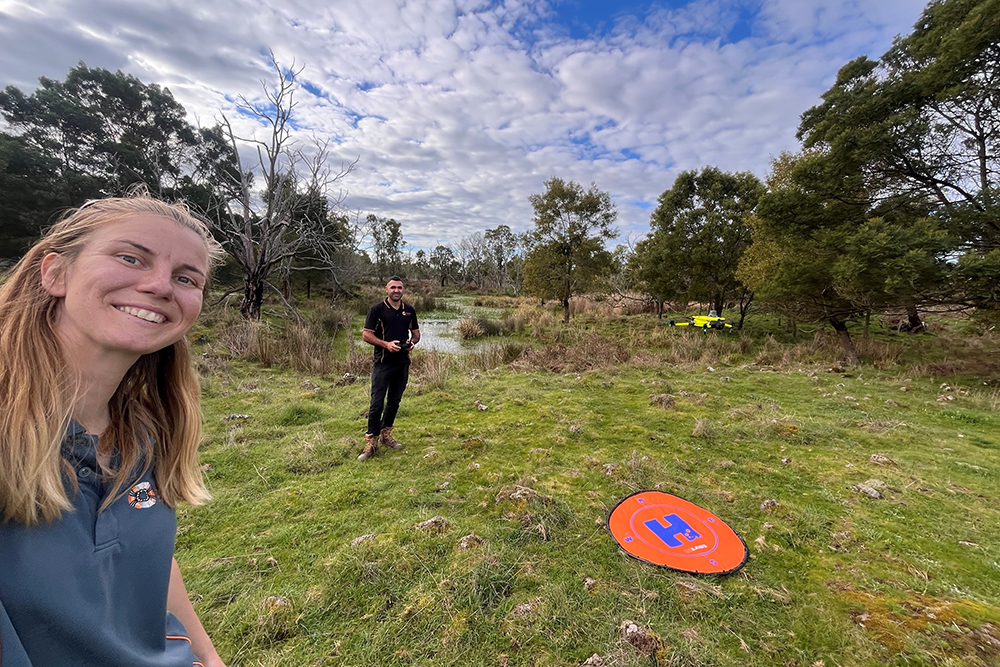
Stacey Koprdova: I’m Stacey Koprdova, we’re the Invasive Species Officers at Gunditj Mirring Traditional Owners Aboriginal Corporation. We’re in South-West Victoria on Gunditjmara Country and a lot of our works is focused on Budj Bim Cultural Landscape and on our Indigenous Protected Areas.
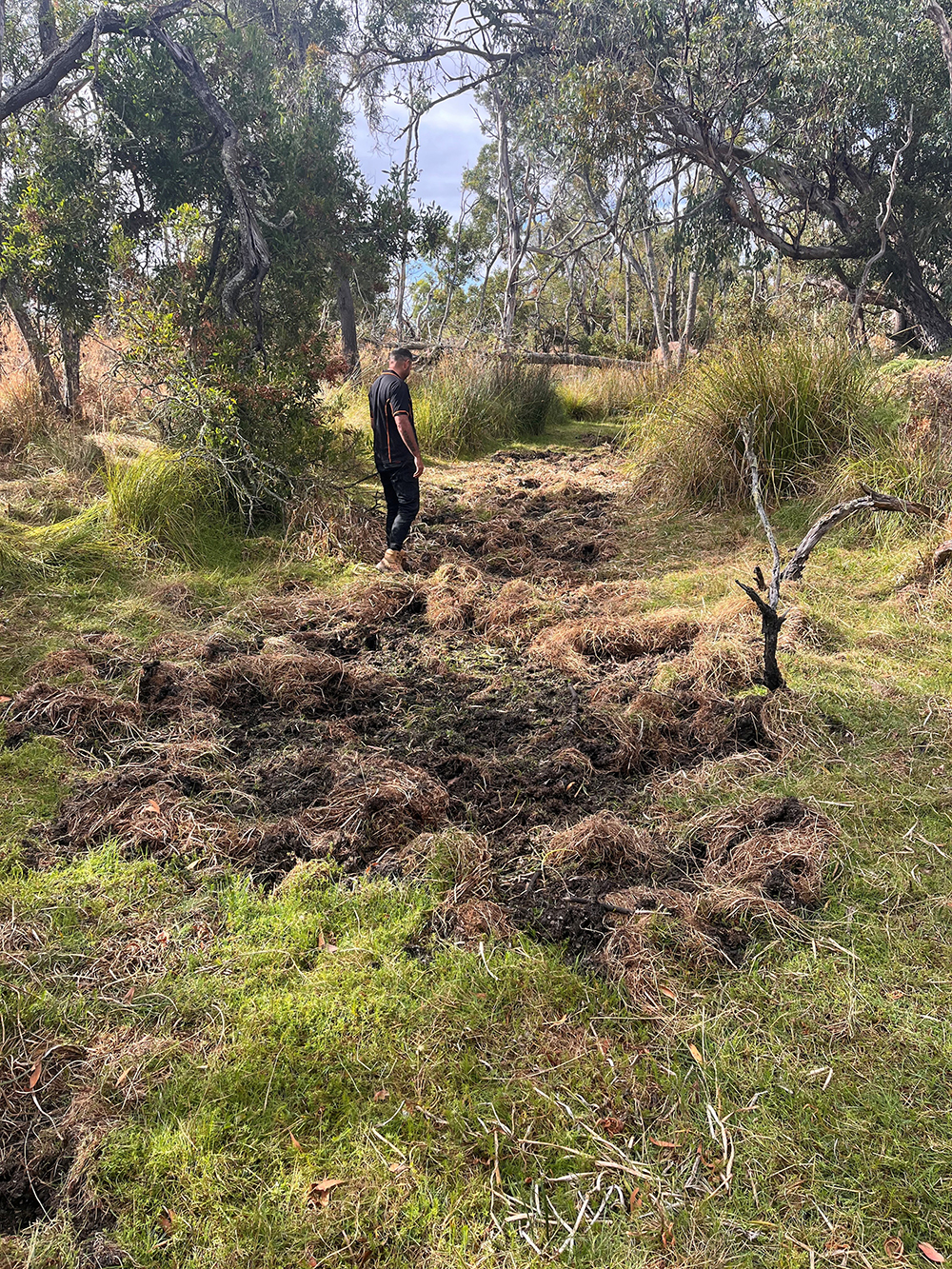
Brad Williams: The main works we do down here out on Country is feral pig, feral deer and also woody weeds. Biosecurity is very important to us, that we keep on top of it to protect our Aboriginal sites, our waterways and also our beautiful Country.
Stacey Koprdova: We’d like to thank Dr Heather Channon, the National Feral Pig Management Coordinator, for her nomination for this award. It’s nice to have our hard work recognised and what we do to protect Country.
Brad Williams: Yeah. It’s absolutely deadly to be recognised for this award. It shows the younger generation the next future that’s coming up, you work hard and it all pays off.
Photos