
Skip to main content Skip to main navigation Skip to search
Home

Top navigation main

  • News & media
  • Jobs
  • Ministers
  • Contact us
Main menu

AWE Main

  • Agriculture and land
    Agriculture and land Building stronger and more sustainable agriculture, fisheries, forestry and land care.
    • Animal health
    • Climate change and agriculture
    • Farming, food and rural support
    • Fisheries
    • Forestry
    • Levies and charges on agricultural products
    • Mouse infestation advice
    • Plant health
    Farmer in a wheat field at sunset

    Drought, disaster and rural support

    Farmers and rural communities face many risks to their business.

    Find out more

  • Biosecurity and trade
    Biosecurity and trade
    • Aircraft, vessels and military
    • Biosecurity policy
    • Cats and dogs
    • Exporting
    • Importing
    • Pests, diseases and weeds
    • Public awareness and education
    • Trade and market access
    • Travelling or sending goods to Australia
    • Report a concern
    Brown marmorated stink bug

    BMSB Seasonal Measures

    Australia has strengthened seasonal measures to manage the risk of BMSB.

    View our seasonal measures

  • Science and research
    Science and research Undertaking research and collecting data to support informed decisions and policies.
    • Australian Bureau of Agricultural and Resource Economics and Sciences (ABARES)
    • Plant Innovation Centre
    Abares

    ABARES Insights

    Get 'snapshots’ of agricultural, forestry and fisheries industries, or analysis of key issues.

    Find out more

  • About us
    About us We enhance our agricultural industries and trade, and manage the threat of biosecurity risks to Australia.
    • Accountability and reporting
    • Assistance, grants and tenders
    • Contact us
    • Fees and charges
    • News and media
    • Our commitment to you
    • Payments
    • People and jobs
    • Publications
    • What we do
    • Who we are
    Budget 2025-26

    Budget 2025-26

    The 2025–26 Portfolio Budget Statements were released on 25 March 2025.

    Find out more

  • Online services
    Online services We do business with you using online platforms. This makes it easier for you to meet your legal requirements.
Department of Agriculture

Breadcrumb

  1. Home
  2. About us
  3. News and media
  4. Detector dog teams protect Australia from exotic animal diseases

Back to news - AWE

  • Back to news

Detector dog teams protect Australia from exotic animal diseases

  • News
  • Biosecurity
  • Detection
1 May 2026

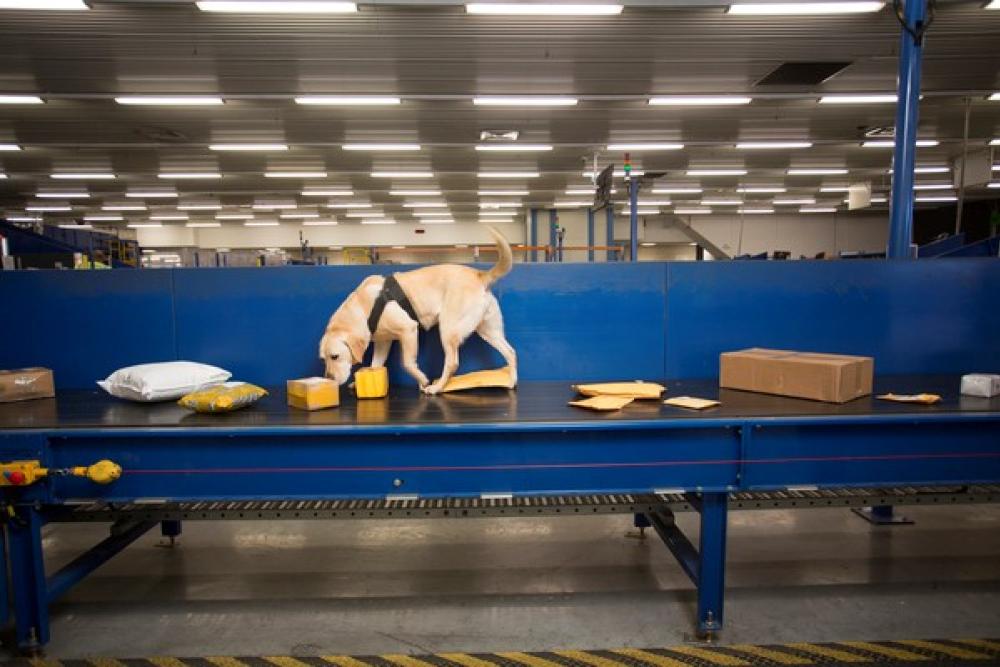
Detector dog teams operate at key entry points across the country, including international airports, seaports and mail centres. They are a critical part of Australia’s biosecurity system, helping to stop potential threats before they can enter the country.

Every day, highly trained detector dogs and their handlers search luggage and parcels to identify high‑risk biosecurity items such as meat products, dairy, eggs and other animal materials that may carry serious diseases. These items can harbour pathogens including foot‑and‑mouth disease, African swine fever and avian influenza, which are not present in Australia but pose a constant global threat.

With millions of travellers and consignments entering Australia each year, detector dogs provide a fast and accurate screening capability. When emerging threats are identified, detector dog teams can be rapidly deployed to increase screening activities across a range of environments, demonstrating their adaptability and versatility.

By intercepting undeclared and high‑risk items at the border, detector dogs form a vital frontline defence in Australia’s biosecurity system. Their work helps protect livestock, wildlife, farmers and the broader economy from potentially devastating disease outbreaks that could have long‑lasting impacts across Australia.

This month’s video features insights from Australia’s Chief Veterinary Officer, Dr Beth Cookson, who highlights how biosecurity detector dog teams play an essential role in preventing serious animal diseases from entering the country.

Hi, I'm Beth Cookson, the Australian Chief Veterinary officer. It's a pleasure to be here today talking about Australia's biosecurity detector dog program.

Slide: Why are biosecurity controls, and particularly detector dogs, important for Australia’s animal biosecurity?

Australia is free of some of the world's worst animal diseases, like foot-and-mouth disease, African swine fever and highly pathogenic avian influenza H5n1 strain. Animal pests and diseases like these are a major threat to Australia's livestock industries and livelihoods. Exotic wildlife diseases can affect the health of our native animals, and some of these diseases can also be zoonotic and affect human health. Detector dogs and their teams work to identify products that could harbor these pests and diseases, protecting animal health, biodiversity, and human health.

Slide: What is foot-and-mouth disease?

Foot and mouth disease is a severe and highly contagious viral disease that affects all cloven-hoofed animals, including cattle, sheep, camelids, deer and pigs. An outbreak of foot-and-mouth disease can have severe consequences on our trade, livelihoods and tourism.

Slide: How has Australia responded to outbreaks in neighbouring countries?

When an outbreak occurred in a neighbouring country, Australia stepped up its border measures, increasing screening and deploying detector dogs at key points of entry to prevent an incursion. This included the introduction of non-shelf stable dairy products as a new detector dog odour and redeploying detector dogs and their teams to screen travellers and their luggage at the baggage carousels.

Slide: What role do detector dogs play in our responses to biosecurity risks?

Detector dogs are mobile, they're adaptable and they're versatile. This means that they can be quickly redeployed to new locations or to detect new threats. Biosecurity detector dogs really are very remarkable in that they can target up to 200 different biosecurity risk commodities, including meat products, dairy, eggs and even queen bees.

Slide: How are biosecurity detector dogs deployed today?

Biosecurity detector dogs are deployed around the country at international mail centers, seaports, and airports. This is a really essential part of our screening tools to protect Australia from important pests and diseases like foot-and-mouth disease, African swine fever and highly pathogenic avian influenza.

  • Share on Facebook
  • Share on Twitter
  • Share on LinkedIn
  • Email
  • Copy link

Related

Decorative image

Inaugural National Biosecurity Strategy Annual Report released

  • News
  • Biosecurity
30 April 2026
A detector dog with its paws on a stainless steel surface

Meet Australia’s 2025 Biosecurity Top Dog

  • News
  • Biosecurity
17 April 2026
X-ray of container of hatching eggs

Illegally hidden eggs found in socks and disguised as Easter decorations

  • News
  • Biosecurity
27 March 2026
Thanks for your feedback.
Thanks! Your feedback has been submitted.

We aren't able to respond to your individual comments or questions.
To contact us directly phone us or submit an online inquiry

CAPTCHA
This question is for testing whether or not you are a human visitor and to prevent automated spam submissions.

Please verify that you are not a robot.

Skip
Page last updated: 01 May 2026

We acknowledge the continuous connection of First Nations Traditional Owners and Custodians to the lands, seas and waters of Australia. We recognise their care for and cultivation of Country. We pay respect to Elders past and present, and recognise their knowledge and contribution to the productivity, innovation and sustainability of Australia’s agriculture, fisheries and forestry industries.

Artwork: Protecting our Country, Growing our Future
© Amy Allerton, contemporary Aboriginal Artist of the Gumbaynggirr, Bundjalung and Gamilaroi nations.

Footer

  • Contact us
  • Accessibility
  • Disclaimer
  • Privacy
  • FOI

© Department of Agriculture, Fisheries and Forestry

Facebook X LinkedIn Instagram