Skip to main content Skip to main navigation Skip to search
Home

Top navigation main

  • News & media
  • Jobs
  • Ministers
  • Contact us
Main menu

AWE Main

  • Agriculture and land
    Agriculture and land Building stronger and more sustainable agriculture, fisheries, forestry and land care.
    • Animal health
    • Climate change and agriculture
    • Farming, food and rural support
    • Fisheries
    • Forestry
    • Levies and charges on agricultural products
    • Mouse infestation advice
    • Plant health
    Farmer in a wheat field at sunset

    Drought, disaster and rural support

    Farmers and rural communities face many risks to their business.

    Find out more

  • Biosecurity and trade
    Biosecurity and trade
    • Aircraft, vessels and military
    • Biosecurity policy
    • Cats and dogs
    • Exporting
    • Importing
    • Pests, diseases and weeds
    • Public awareness and education
    • Trade and market access
    • Travelling or sending goods to Australia
    • Report a concern
    Brown marmorated stink bug

    BMSB Seasonal Measures

    Australia has strengthened seasonal measures to manage the risk of BMSB.

    View our seasonal measures

  • Science and research
    Science and research Undertaking research and collecting data to support informed decisions and policies.
    • Australian Bureau of Agricultural and Resource Economics and Sciences (ABARES)
    • Plant Innovation Centre
    Abares

    ABARES Insights

    Get 'snapshots’ of agricultural, forestry and fisheries industries, or analysis of key issues.

    Find out more

  • About us
    About us We enhance our agricultural industries and trade, and manage the threat of biosecurity risks to Australia.
    • Accountability and reporting
    • Assistance, grants and tenders
    • Contact us
    • Fees and charges
    • News and media
    • Our commitment to you
    • Payments
    • People and jobs
    • Publications
    • What we do
    • Who we are
    Budget 2026-27

    Budget 2026-27

    The 2026–27 Portfolio Budget Statements were released on 12 May 2026.

    Find out more

  • Online services
    Online services We do business with you using online platforms. This makes it easier for you to meet your legal requirements.
Department of Agriculture

Breadcrumb

  1. Home
  2. About us
  3. News and media
  4. Indigenous rangers come together to shape the future of biosecurity

Back to news - AWE

  • Back to news

Indigenous rangers come together to shape the future of biosecurity

  • News
  • Biosecurity
  • First Nations
23 October 2026

Fifty-six representatives from Indigenous ranger organisations joined department staff and government representatives in Darwin on 2 and 3 September for the Northern Australia Indigenous Rangers Biosecurity Round Table.

Held every 2 years, the round table provides an important forum for Indigenous ranger organisations and the department to share knowledge, discuss priorities and identify opportunities to shape the future of ranger-led biosecurity.

Indigenous rangers play a critical role in protecting northern Australia from biosecurity threats. Their deep connection to Country and generations of local knowledge provide valuable insights into identifying, monitoring and managing risks across some of Australia's most remote landscapes.
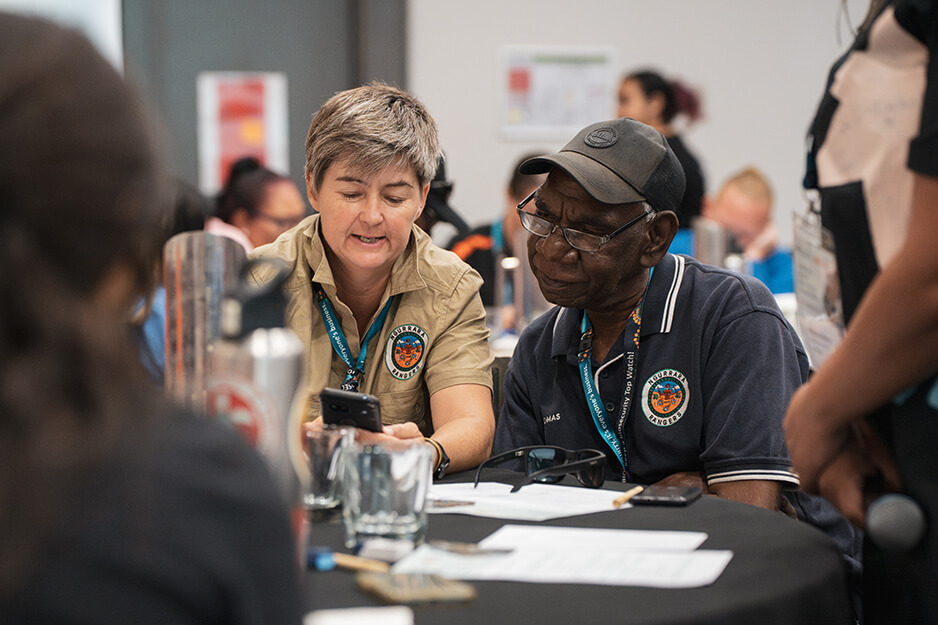
The Round Table helps ensure local knowledge and on-ground expertise inform biosecurity planning and decision-making.

This year's round table was hosted on Larrakia Country and facilitated by experienced Indigenous facilitators Jason Elsegood and Ashlee Wone.

During the 2 days, participants reviewed progress against recommendations from previous round tables. Discussions confirmed that the department’s Indigenous Ranger Biosecurity Program continues to deliver in areas valued by ranger organisations. The ongoing importance of the Biosecurity Engagement Officer Network was reaffirmed, and feedback provided indicated that improvements to grant administration processes are making participation in the program easier. The forum reinforced that strong relationships, regular engagement and two-way communication remain fundamental to the program's success.

Support was also confirmed for the structured biosecurity training pathway which provides a clear progression from the fundamentals of biosecurity through to the Biosecurity Masterclass and the Certificate IV Tropical Biosecurity. This new extended career pathway supports consistent capability development across the ranger network.

During the 2 days, Karajarri Traditional Lands Association, the Kimberley Ranger Network representing Kimberley Land Council and Nyangumarta Rangers presented case studies, sharing their approaches to community engagement, land and sea management and which pests and diseases are of most biosecurity concern in their respective regions. These presentations provided valuable ranger-to-ranger learning opportunities, exchange of practical knowledge, experiences and approaches that can be adapted and applied across northern Australia.
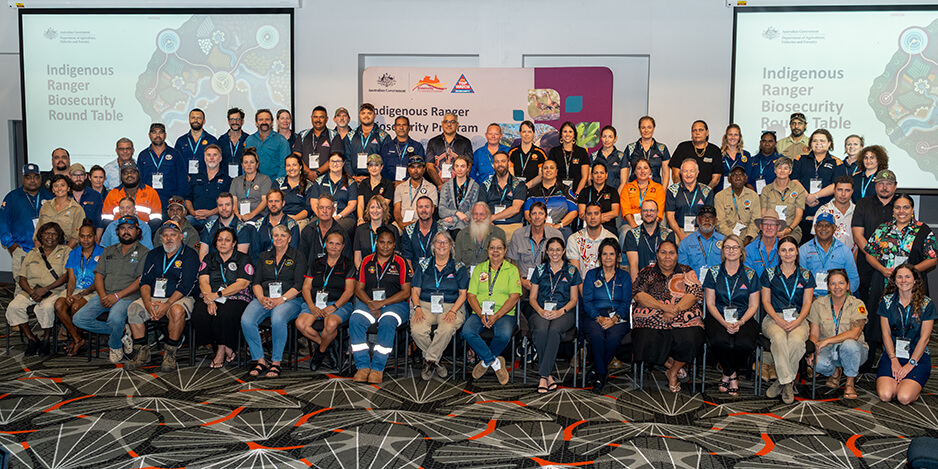
Attendees at the Northern Australia Indigenous Rangers Biosecurity Round Table

Participants also received the latest information on bird flu (H5 avian influenza) from the Office of the Chief Veterinary Officer.

Looking ahead, the round table generated several suggestions for future consideration. Participants highlighted opportunities to make science and technical information more accessible and relevant for ranger groups, better align the timing of departmental and ranger operational planning. Discussions also explored expanding the range of biosecurity work undertaken by rangers and further integrating traditional ecological knowledge into biosecurity surveillance and monitoring.

This year’s round table highlighted the significant contribution Indigenous rangers make to Australia's biosecurity system. By bringing together ranger organisations and government, the forum helps ensure local knowledge, practical experience and on-ground expertise continue to inform biosecurity planning and decision-making. It also strengthens ranger-to-ranger networks, supports the sharing of knowledge and good practice, and ensures Indigenous rangers continue to shape the future direction of the department’s program and broader biosecurity outcomes across northern Australia.

Round tables continue to play an important role in the department's engagement with our stakeholders. By bringing together diverse perspectives, these forums support collaboration, strengthen relationships and help inform our priorities and policies.

Read more and watch the video: Northern Australia Indigenous Rangers Biosecurity Round Table

Keep up to date with the work or rangers, subscribe to the Frontline Ranger Newsletter.
  • Share on Facebook
  • Share on Twitter
  • Share on LinkedIn
  • Email
  • Copy link

Related

Decorative

Biosecurity ready from day one at Western Sydney International (Nancy-Bird Walton) Airport

  • Media release
  • Biosecurity
21 October 2026
Two people sitting at a table in front of a banner

Biosecurity beyond borders – partnering globally to be future ready

  • News
  • Biosecurity
19 October 2026
Decorative image

H5 bird flu updates

  • Statement
  • Biosecurity
16 October 2026
Thanks for your feedback.
Thanks! Your feedback has been submitted.

We aren't able to respond to your individual comments or questions.
To contact us directly phone us or submit an online inquiry

CAPTCHA
This question is for testing whether or not you are a human visitor and to prevent automated spam submissions.

Please verify that you are not a robot.

Skip
Page last updated: 23 October 2026

We acknowledge the continuous connection of First Nations Traditional Owners and Custodians to the lands, seas and waters of Australia. We recognise their care for and cultivation of Country. We pay respect to Elders past and present, and recognise their knowledge and contribution to the productivity, innovation and sustainability of Australia’s agriculture, fisheries and forestry industries.

Artwork: Protecting our Country, Growing our Future
© Amy Allerton, contemporary Aboriginal Artist of the Gumbaynggirr, Bundjalung and Gamilaroi nations.

Footer

  • Contact us
  • Accessibility
  • Disclaimer
  • Privacy
  • FOI

© Department of Agriculture, Fisheries and Forestry

Access to information logo
Facebook X LinkedIn Instagram