
March has been a busy month, with Wagin Woolorama and grant information sessions held across WA, alongside the rollout of Round 1 grant outcomes for Farm Business and Livestock Transport Industry Transition Programs and announcements of dates for the final rounds. This follows the announcement of the Supply Chain Capacity Grant in February to strengthen the sheep meat supply chain.
It is pleasing to see grant money starting to flow across the supply chain and see some of the projects that are being commissioned for both sheep meat and wool. However, I’m also aware that those in the agricultural sector have very-real concerns about ongoing supply shocks and rising input costs, and that planning and risk management are top of mind given this uncertainty.
Engagement: Woolorama & Drop-In Grant Information Sessions
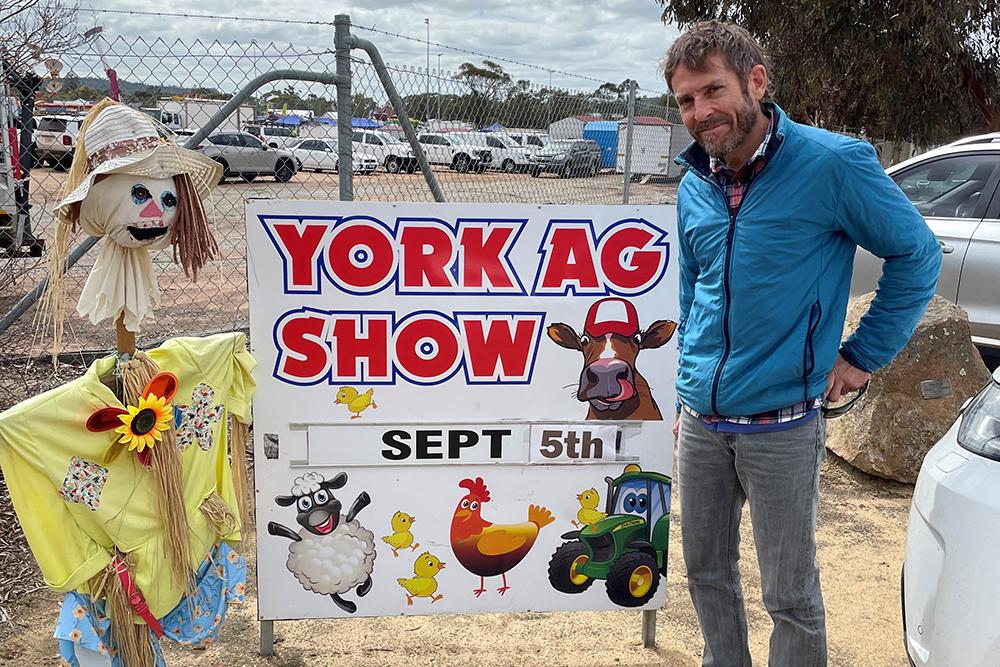
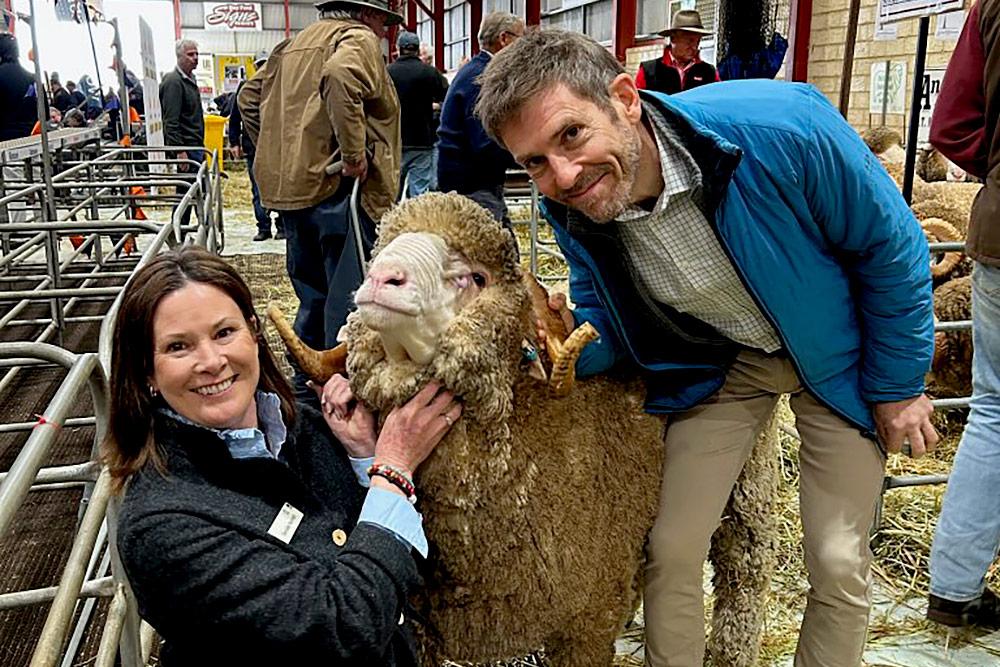
Wagin Woolorama took place on 6-7 March, bringing together farmers, producers, businesses and professionals from across the agriculture sector to connect, share knowledge and showcase their products and expertise. I thoroughly enjoyed attending both days and had the opportunity to meet with farmers/producers/potential grant recipients, industry bodies and other stakeholders. I’m always interested to hear what people in the sector think and what is top of mind for them and I had many useful conversations.
Throughout early March, DAFF held drop-in information sessions across regional WA, providing sheep producers with the opportunity to ask questions about the Farm Business Transition, Supply Chain Capacity Programs and package in general. Over 20 sessions were delivered across WA, covering major sheep producing regions including Peel, the Southwest, Great Southern, Wheatbelt, Perth Metro and the Mid West. I attended some of these and a consistent theme was around confusion of the types of grants available. I’m really pleased that the DAFF team provided as much explanation as possible to help people understand the best grant for them and how to apply for the second rounds.
I’ve also summarised the difference between the grants in a table below to help.
Round 2 of the Farm Business Transition and Livestock Transport Industry Transition programs are opening in May 2026 – more information on these programs will become available in the coming months.
Round 2 Grant Opportunities in 2026
| Program | Who can apply | What the funding supports | Funding available | Round 2 timing |
|---|---|---|---|---|
| Supply Chain Capacity Program | WA sheep producers and processors | Activities to assist with capital works that increase capacity, efficiency and productivity of the sheep supply chain. | Funding from $50,000 up to $2.0 million for producers, $5 million for processors (both GST exclusive) | Now open and closes 24 April 2026 |
| Farm Business Transition Program | Sheep producers impacted by the phase out | Activities to assist with on-farm adoption and uptake of alternative farming systems and practices. | Funding of up to $75,000 (GST exclusive) across both round | Opens May 2026 |
| Livestock Transport Industry Transition Program | Livestock transport operators impacted by the phase out | Assistance to livestock transport operators to diversify into other transport related activities. | Funding of up to $40,000 (GST exclusive) across both round | Opens May 2026 |
For Round 2, you can apply for both Supply Chain Capacity and Farm Business Transition for the same activity. If you are successful under Supply Chain Capacity, your application for Farm Business will be reviewed to exclude that activity.
Please check out the grant guidelines when they become available to check all the eligibility requirements. You need to demonstrate that your enterprise was involved in the live sheep export by sea trade from 1 July 2020 to be eligible for the Farm Business Transition Grant.
Round 1 Grants: Outcomes
Grant outcomes for Round 1 of the Farm Business Transition Program and the Livestock Transport Industry Transition Program have been announced with:
- $10.8 million in funding awarded to 180 producers from Farm Business Transition, and
- $691,117 in funding awarded to 20 livestock transport operators from Livestock Transport Industry Transition.
Funded projects were wide-ranging and included feed lotting and finishing upgrades, feed and fodder storage, cropping expansion and land improvement, fencing, pasture improvement, water infrastructure and business planning and diversification.
Transport projects included investment in trailers, trucks, sheds, and equipment to diversify and upgrade domestic transport operations.
A full list of successful applicants is available at www.agriculture.gov.au/2028.
WA Roadmap, Workshop 3
The third workshop for the WA Roadmap to 2028 consultation process was held this month, focusing on further refining all of the industry input to date, to make sure a sensible and pragmatic approach continues and that the best system gains are found to help confidence and guide investment. This state-based plan developed by industry for the sector is also complemented by the national plan: The Future Flock.
The roadmap’s consultation phase is now nearing completion, with the next phase looking to bring together all of the consultation feedback, along with Strategic Steering Group guidance and economic modelling and analysis to inform the development of an action plan in the coming weeks. Have your say via the QR code. I’ll keep you posted on progress!
Other Updates
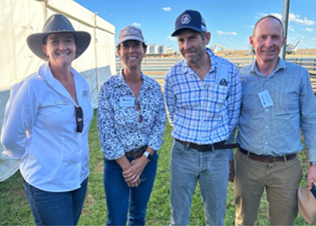
I was able to attend the WA Livestock Research Council’s field day Sheep Strong: The Next Chapter for Sheep Producers at Moojepin Merinos, Coyrecup, on 18 March 2026. Key take-aways were that initiatives that re-build our flock are top of mind for producers as well as what finishing could and should look like. There was a lot of positive and future focused discussion about what is possible.
I was also invited to talk to the WAF AGM on the 20th and I attended the 2026 Merino Forum later that day too. Both were good opportunities to ‘take the temperature’ and get some further feedback on what was top of mind for sheep producers.
As always, please don’t hesitate to reach out if you have any questions either directly to me 0432 837 393 or via transition.advocate@aff.gov.au.