
Hello everyone,
I’ve been on the road a fair bit this month connecting with producers, researchers, industry representatives and government stakeholders across WA and the eastern states.
Sentiment remains positive overall but is tempered with uncertainty around global markets, supply chain disruption, and a dry winter. Despite this there seems to be genuine interest in a flock rebuild on the back of strong market signals for meat and wool.
Supply is tight and I’ve had many conversations about moving beyond a boom-and-bust cycle to a more managed supply chain where everyone can capture value. It is good to see the projects starting to be commissioned through the grant processes and lots of discussions with the production base about how the dual-purpose Merino can be maximised to enable the best returns for individual production systems and help smooth supply and demand downstream.
Grants – announcements
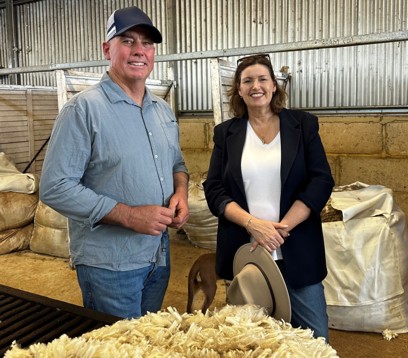
Grant outcomes for Round 2 of the Supply Chain Capacity program were jointly announced on 11 September 2026.
Funding was awarded to 104 producers to support investment into on-farm finishing systems, including new or expanded feedlots, confinement feeding systems, paddock finishing and efficiency-led technology improvements and to 4 processors for building processing capacity, including lairage upgrades, cold storage enhancements, value-added production and abattoir expansion.
The successful projects span the Mid-West, Wheatbelt, South West, Great Southern, Peel, Gascoyne and Goldfields-Esperance regions.
The program funds capital works that increase the capacity, efficiency and productivity of the sheep supply chain in WA.
For more information visit WA Department of Primary Industries and Regional Development.
WA stakeholder engagements
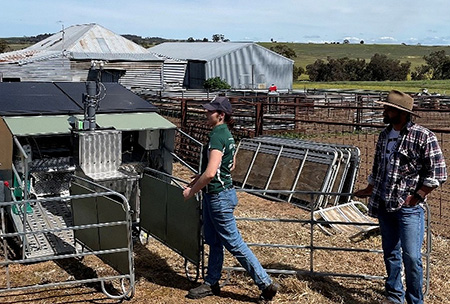
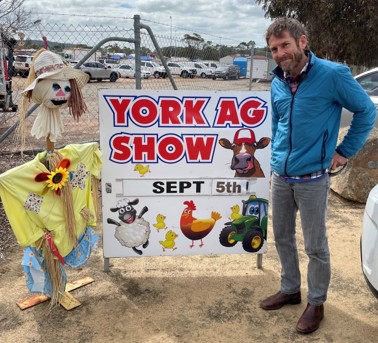
I began the month at the York Agricultural Show before attending the University of Western Australia's Ridgefield Farm Open Day in Pingelly. Their research into sheep resilience, productivity, methane mitigation and soil health highlighted the important role science and innovation will play in the sector's future.
I also attended the Northam Farmers Show and finished the month at the Royal Perth Show. I again saw firsthand the passion, innovation and resilience that continue to underpin Western Australia's sheep industry.
Canberra & Sydney
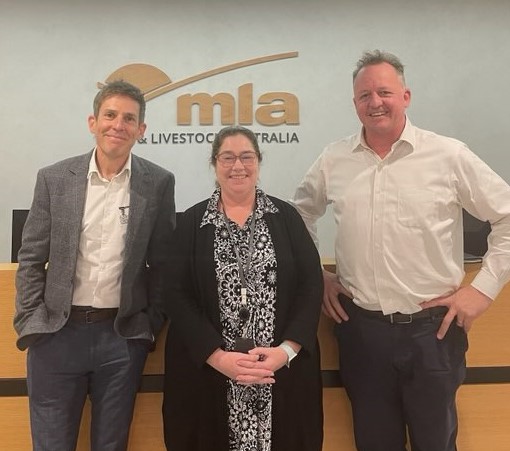
I spent a week in Canberra and Sydney meeting with government and industry stakeholders. At Parliament House, I met with Minister Collins and Assistant Minister Chisholm’s office to provide my six-monthly update on the WA sheep industry and discuss the progress of transition activities.
While in the east, I also met with representatives from the National Farmers Federation, Australian Meat Processor Corporation, Sheep Producers Australia, Austrade, Wool Producers Australia, Meat and Livestock Australia, Australian Wool Innovation and a number of teams across DAFF who work with the sheep industry. The discussions provided a two-way-street of real-time insight from across the sector including what is top of mind for each organisation and share updates on developments in Western Australia.
Trade to the Middle East and the Enhancing Market Demand Grant Program
Through recent conversations it is becoming evident that market and trade are a real focus for industry. I have reached out to the Trade and International Division at the Department of Agriculture, Fisheries and Forestry who have provided the following insights:
- The Middle East is an important destination for Australian agricultural exports. In 2025, prior to the current trade disruptions, Australian exports to the region included: $1.3 billion of sheep meat (23% of exports); $1.3 billion of wheat (13%); $688 million of beef and veal (4%); $670 million of canola (15%); and $322 million of barley (10%).
- The conflict in the Middle East has seen restrictions on airspace and shipping lanes limit trade volumes into and out of the region. This has affected inter alia high-value red meat exports and fuel and fertiliser availability leading to cost increases for Australian motorists, industry and farmers. The Australian Government has been working to secure fuel and fertiliser supplies and coordinating a national approach to maintain fuel availability and protect essential services.
- Australian agricultural exports to the Middle East are facing heightened cost structures, logistical constraints, increased transit times due to the need to reroute, and elevated freight insurance premiums. The contagion of the conflict to the Red Sea is now impacting the competitiveness of grain from Europe, Russia and the Ukraine. This is benefiting Australian grain exporters in some key markets as competitor product is redirected through longer and more costly shipping routes.
- Key destinations for Australian red meat exports, including the UAE, Saudi Arabia, Kuwait, Oman, and Qatar, remain open but are subject to volume variability. Shipments faced sharp declines during peak disruption (e.g. red meat exports fell ~50% in March 2026 versus February levels), but partial recovery occurred following ceasefire periods (~23% below pre-disruption levels). Exporters are making adjustments including more selective shipments, margin management, and product form adaptation (e.g. frozen versus chilled) to manage logistical constraints. Retail demand for Australian beef and lamb in these export markets remains strong despite limited tourism, supply delays, and higher costs. Although reduced inbound tourism has softened food service demand, especially in high value categories.
- ABS trade data over the period 2002–2025 shows that Australian live animal exports to the Middle East have been generally declining while sheep meat exports have increased. Australian live sheep exports by sea were worth $388 million in 2002 (equivalent to $724 million in 2025 values), involving almost 6 million sheep, declining to $44 million (315,000 sheep) in 2025. Conversely, sheep meat exports to the Middle East were worth $174 million in 2002 (equivalent to $324m million in 2025–26 values), rising to $1.3 billion by 2025 - a difference of nearly $800million in deflated terms.
- In the two years to 2025, sheep meat exports to the Middle East increased by around $500 million reflective of the continuing trend towards market preferencing of frozen and chilled sheep meat from Australia. Apart from Jordan and Iraq this trend was relatively consistent across the region.
- The Australian Government’s Phase Out of Live Sheep Exports by Sea program is working with industry to assist individuals, supply chain businesses and communities transition from the trade.
- The Enhancing Market Demand program is working to strengthen market demand for Australian sheep products and the supply chains that service them by identifying commercially viable diversification pathways and developing new value-added and by-product opportunities for domestic and international specialty markets. Priority focus is given to markets previously serviced by the live export trade.
- In addition to 12 grant funded Enhancing Market Demand projects, Austrade and Meat & Livestock Australia are also assisting the industry transition through marketing and promotional activities to support growth in exports of processed sheep meat products as well as diversification opportunities for agri-food exports to the Middle East and North Africa.
Strategic Steering Group
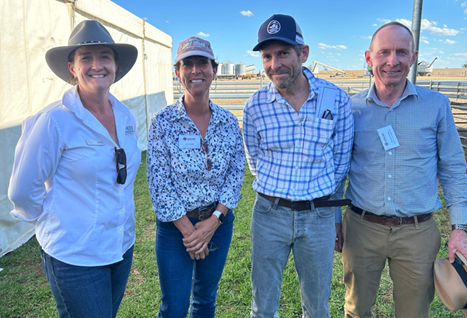
September also marked the final meeting of the Strategic Steering Group. The group played a key role in guiding the development of the WA Roadmap to 2028, its supporting economic analysis, and the design on the WA Roadmap Implementation Fund. I would like to sincerely thank Ashley Herbert, Bindi Murray and Erin Gorter for their advice, support and commitment throughout this important work. Their passion for the sector and how it can evolve is genuine and deep.
As always, please don’t hesitate to reach out if you have any questions via transition.advocate@aff.gov.au.