

PLANT PEST
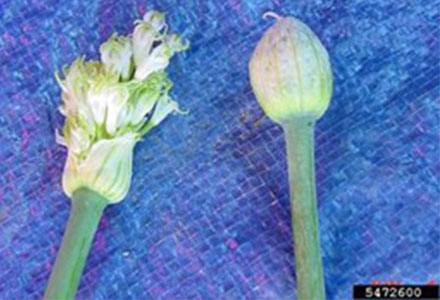
with aster yellows (left) and normal flower yet to open (right).
Credit: Lindsey du Toit, Washington State University,
Bugwood.org
Phytoplasmas 16Srl group (aster yellows group)
Exotic to Australia
Features: A disease caused by a bacterium-like organism called
a phytoplasma, which damages important vegetables, fruit, field
crops and ornamental plants.
Where it's from: Asia, Europe, North America, South Africa,
Argentina, Brazil, Colombia and Peru.
How it spreads: Importation of infected plants and plant material
(not including seed); local spread by insects such as leafhoppers.
At risk: Many vegetable crops including carrot, lettuce, onion and
spinach; grains including canola, wheat and barley; forestry and
flowers, including the daisy (aster) family.
Keep it out
Aster yellows disease is caused by Candidatus Phytoplasma asteris. This is a type of bacterium without cell walls, known as a phytoplasma. It causes serious disease in more than 300 species, including important vegetables, fruit, ornamental plants and grain crops.
Symptoms of aster yellows disease are extensive deformities in plant growth and development. When infected, flowers are particularly affected with many abnormalities, such as greening of flowers (conversion of petals and sepals to more leaf-like structures) and proliferation of shoots to produce witch’s broom appearance. In some cases, the deformation of flowers completely wipes out the production of whole crops.
The most severely affected plant hosts are vegetables such as carrot, lettuce, onion and spinach; several ornamental species, including aster, gladiolus, and hydrangea; and grain crops such as canola, wheat and barley.
Yellow asters disease is not seed-transmissible. It spreads long distances by importation of infected plants or plant materials. Local spread is by leafhopper insects.
If yellow asters disease made it to Australia, important vegetables and grain crops, nurseries and flower growing would be at risk.
Importing goods
To keep aster yellows out of Australia, never ignore Australia’s strict biosecurity rules.
Before you import, check our Biosecurity Import Conditions system (BICON).
What to look for
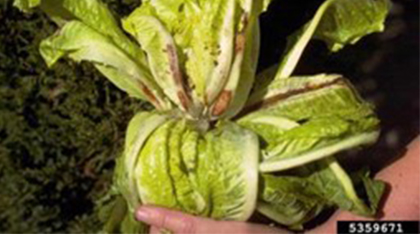
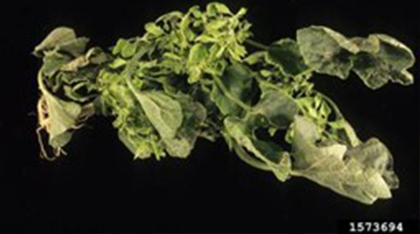
Symptoms vary depending on the plant, but look out for:
- Stunted plants with yellowing leaves.
- Distorted leaves, stems and flowers.
- Proliferation of shoots to produce witch’s broom appearance. Sometimes small bulb-like structures will form in the flowers instead of seed.
- Any fruits that have a thick stem, grow slowly, are hard and poorly coloured.
- In woody plants look for yellowing, decline, sparse foliage and dieback.
Where to look
Importers
The importation of infested plants and plant material poses the greatest risk for the pest to enter Australia. Keep an eye out for malformed plants.
Growers and home gardeners
Look out for plants with abnormal leaves, stems and flowers.
Crops at risk of the disease include:
- Vegetable crops (beetroot, carrot, celery, lettuce, onion, potato and spinach)
- Fruit and nut crops (apple, pear, apricot, banana, citrus, cherry, grape, mango, papaya, strawberry, raspberry, passionfruit, nectarine, tomato, olive, and macadamia)
- Ornamental plants (dahlia, daisy, rose, magnolia, chrysanthemum, lily, and lupins)
- Field crops (barley, maize, wheat, oat, pearl millet, canola, soybean, and cotton)
What to do
If you think you’ve found a plant with aster yellows:
- take a photo
- do not disturb infected plants (this may be as simple as closing the doors on a shipping container or preventing access to a field or orchard).
Read the detail