

PLANT PEST
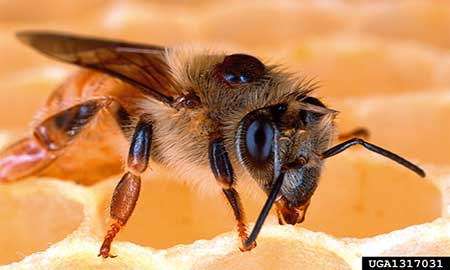
Scott Bauer, USDA Agricultural Research Service, Bugwood.org
Mites of bees (Apis spp.)
Exotic to Australia, with varroa mite (Varroa destructor) present in parts of Australia and are under management in Australia
Features: Look out for sick bees as these parasitic mites' damage bee health, contributing to colony collapse overseas
Where they're from: Most parts of the world
How they spread: Feral bee swarms transported on containers or ships that are infested with mites; local spread on bees or other insects
At risk: Australia’s bees and the pollination services they provide to certain crops
Three mites of bees are listed on both the National Priority Plant Pests and the National Priority List of Exotic Environmental Pests, Weeds and Diseases as they have the potential for significant plant industry/agriculture impacts and may also cause significant damage to our environment and social amenity.
Keep it out
Australia is one of the few countries in the world to remain free of some serious exotic mites of bees. Mites damage bee health by feeding on the insects internally or externally, and by carrying bee infections such as viruses, and spreading them through a colony.
Mites that pose a threat to our bees are:
- Tracheal mite (Acarapis woodi) which is not present in Australia or New Zealand, but is found in most other honey-producing regions of the world such as Europe, North America and parts of Asia.
- Tropilaelaps mites which are present throughout Asia, Indonesia and Papua New Guinea.
- Varroa jacobosoni, now prevalent worldwide, apart from New Zealand, Australia and some countries in Central Africa.
- Varroa mite which is now established in some areas of Australia. Only one haplotype (a set of genes) is established in Australia with another haplotype not in Australia.
Bee mites are most likely to arrive in Australia with infested bees that have stowed away on ships and boats.
Once in Australia, the mites would spread from bee to bee and be transported in hives as they are moved around to pollinate crops. Some mites can hitch a ride on other insects as well, speeding up their spread. Mites can kill hives of wild bees, and beekeepers would need to use types of insecticide to control them.
Importing goods
To keep exotic bees and mites out of Australia, never ignore Australia’s strict biosecurity rules.
Import shipments may need to be treated and certified, so before you import, check our Biosecurity Import Conditions system (BICON).
What to look for
Importers
If you work around imported goods you need to look for swarms of bees or bees and their hives attached to:
- commodities
- shipping containers
- vehicles
- conveyances (ships, boats, aircraft).
Beekeepers
Keep an eye on the health of your bees. It is important to become familiar with established pests, the symptoms they cause and how to control them.
Beekeepers should also be aware of threats posed by exotic pests, so you can recognise something unusual.
BeeAware has resources to help you manage your hives.
Where to look
Near ports
- Look for swarms of bees that might be newly arrived.
Beehives
Check your hives for signs of new pests.
What to do
If you think you’ve found a swarm of bees that could be newly arrived from a ship, or you find unfamiliar pests in your beehive:
- do not disturb the swarm or hive (this may be as simple as closing the doors on a shipping container or sealing bees in a hive if safe to do so)
- take a photo and report without delay.
Stay informed
Read the detail
- BeeAware: varroa mite
- BeeAware: tropilaelaps mite
- BeeAware: tracheal mite
- Bee Biosecurity Video Series for beekeepers
- Australian government: Bees and bee pests and diseases
- Pest Alert! Do you have stowaways on board?
- National pest and disease outbreak
- Varroa mite response
- Country Action List (CAL) for high risk pests