

PLANT PEST
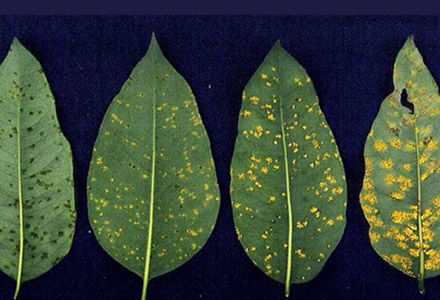
D.T. Junghans Embrapa, PaDIL.
Myrtle (eucalyptus) rust (exotic strains)
Exotic to Australia
Features: A fungal infection that causes brown to grey lesions often surrounded by yellow spores
Where it's from: Central America and Caribbean, United States, South America, Asia, South Africa, Oceania
How it spreads: Importation of infected plant material; local spread by spores on wind, and vehicles, clothing and machinery
At risk: Over 100 known host plant species, mainly from the Myrtaceae family; eucalypt plantations, native forests and urban plantings
This pest is listed on both the National Priority Plant Pests and the National Priority List of Exotic Environmental Pests, Weeds and Diseases as it has the potential for significant plant industry/agriculture impacts and may also cause significant damage to our environment and social amenity.
Keep it out
Myrtle rust (Austropuccinia psidii 'exotic strains') is a fungal disease that causes deformed leaves, heavy defoliation of branches, dieback, stunted growth and often plant death.
The exotic strains of myrtle rust are different to the strain which was introduced to Australia in 2010. It has since spread across the eastern states, Tasmania and the Tiwi Islands in the Northern Territory and the northern part of Western Australia, slowly altering ecosystems as susceptible species die.
Myrtle rust (exotic strains) infects plants belonging to the Myrtaceae family, a large plant family that includes eucalypts, paper barks, bottle brushes and lilly pillies as well as other important Australian species.
Myrtle rust (exotic strains) is one of the most serious exotic threats to Australia’s natural environment. It also threatens commercial native forests. Myrtle rust 'exotic strains' and myrtle rust strain present in Australia combined would be highly damaging to our eucalyptus trees.
Importing goods
To keep Myrtle rust (exotic strains) out of Australia, never ignore Australia’s strict biosecurity rules.
Import shipments may need to be treated and certified, so before you import, check our Biosecurity Import Conditions system (BICON).
What to look for
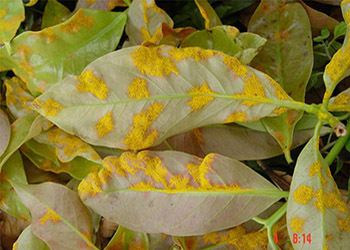
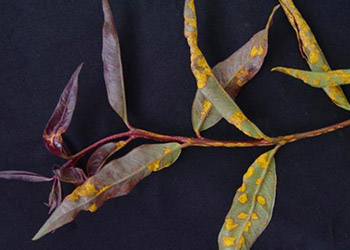
- The first sign of infection is tiny pustules on new growth, which erupt after a few days producing yellow spores.
- The infected area spreads and pustules eventually merge.
- Leaves, fruit and flower parts are susceptible, with dieback, stunted growth and plant death occurring over time.
Where to look
Importers
Importation of infected plant material, including cut flowers, nursery stock and seeds is the most likely way that Myrtle rust would make it to Australia. Spores can also be carried on timber, wood packaging and clothing, shoes, other personal effects and equipment.
Nursery owners, foresters and home gardeners
Look for dark spots, yellow pustules, deformed leaves and dieback on plants in the Myrtaceae family, which includes eucalypts, paper barks (melaleucas), bottle brushes (callistemons) and lilly pillies.
Campers and bushwalkers
Stay as clean as possible while in the bush.
Remove as much soil, organic matter and weed seeds as you can from:
- clothing
- footwear
- tools and equipment
- machinery
- vehicles
- backpacks
- tent pegs
- anything else that touches plants or the ground.
What to do
If you think you’ve found Myrtle rust (exotic strains):
- do not move samples
- take a photo
- contain the disease without disturbing it (this may be as simple as closing the doors on a shipping container).