

PLANT PEST
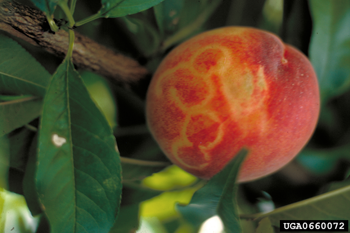
EPPO, Bugwood.org.
Plum pox virus (sharka)
Exotic to Australia
Features: Plum pox virus is the most devastating viral disease of stone fruit in the world, deforming fruit
Where it’s from: Europe, Africa, Asia, North America, South America and the Russian Federation
How it spreads: Importation of infected plants, fruits or plant propagation material. It can also be transmitted by insect vectors such as aphids
At risk: Stone fruit crops including plums, peaches, apricots, nectarines; cherries and almonds; related ornamentals.
Keep it out
Plum pox virus (also known as sharka or Potyvirus) is one of the most destructive diseases of stone fruits in the world. The virus poses no threat to humans but can infect a large number of plants in the Prunus family.
Fruit production drops by up to a third in infected trees and fruit that is produced is often deformed or blemished with brown flesh, often marked with spots or rings, and is less sweet, smaller and tasteless or bitter.
Plum pox virus is spread by grafting diseased stock onto other trees, and then between trees by aphids that suck sap. There is no cure or treatment for the virus and all infected trees in an area must be destroyed.
If the disease made it to Australia, many crops, including stone fruit, cherries and almonds, would be threatened.
Importing goods
To keep plum pox virus out of Australia, never ignore Australia’s strict biosecurity rules.
Import shipments may need to be treated and certified, so before you import, check our Biosecurity Import Conditions system (BICON).
What to look for
Symptoms of the disease vary greatly depending on the species of plant infected, the season and local conditions. Leaves, flowers and fruit can all be affected.
The disease develops slowly and one tree will show a range of signs over several years. Usually one or two branches show signs which then spread through the tree.
Common symptoms include:
- mottling, spotting and yellowing on leaves, fruit and tree trunk
- trunks splitting
- fruit dropping early.
Ultimately, the virus needs to be confirmed in plant tissue in a laboratory.
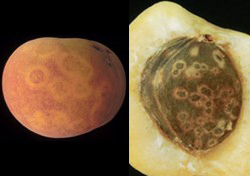
M. Cambra, IVIA, Moncada, Valencia (ES), EPPO (left); Rings on the surface of a seed of a PPV-infected apricot fruit (right)
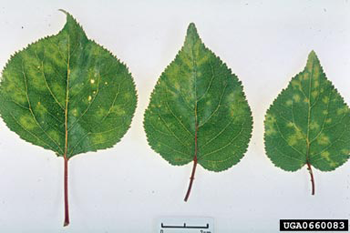
Source: Biologische Bundesanstalt für Land-und Forstwirtschaft, Bugwood.org
Where to look
Importers
Infected plant material is the most likely way that the disease would enter Australia.
Growers and home gardeners
Look out for symptoms of plum pox virus including leaf damage or spots on fruit, in:
- plums
- peaches
- apricots
- nectarines
- cherries
- almonds
- related ornamentals.
What to do
If you think you’ve found plum pox virus:
- take a photo
- do not disturb infected plants (this may be as simple as preventing access to an orchard).