

PLANT PEST
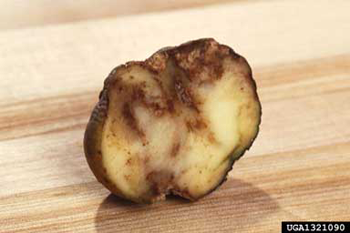
Scott Bauer, USDA Agricultural Research Service, Bugwood.org
Potato late blight (exotic strains)
Exotic to Australia
Exotic to Australia: Phytophthora infestans that causes potato late blight is exotic to Australia
Features: Fast spreading fungal disease that rots entire fields of potatoes and kills tomato crops
Where it’s from: Africa, Asia, Europe, North America, South America, New Zealand, Fiji, Papua New Guinea
How they spread: Importation of infested seed potatoes; local spread by spores blown in the wind or transported on clothing, equipment or in soil
At risk: Potato, tomato and related species including eggplant
Keep it out
Potato late blight caused by Phytophthora infestans is the most devastating disease of potatoes and one of the most devastating plant diseases of any crop. Phytophthora infestans (A2 mating type) is exotic to Australia, while A1 mating type is present in Australia infecting tomato. Phytophthora infestans caused the Irish potato famine in the 1840s and continues to devastate potatoes and tomatoes worldwide, costing billions of dollars annually in losses and control costs.
Once infected, complete collapse of foliage can occur within a few days. Blight can spread very quickly, carried by wind and rain. It can remain dormant in plant debris or soil for years.
In addition to damaging the potato plant with black spots on leaves, potatoes can also become infected with a brown rot that leaves them a mushy mess with a strong smell. Fields of potatoes can be destroyed in less than two weeks.
While there is a type of potato late blight in Australia, the more severe type is not found here. It poses a significant risk to both potato and tomato farming in Australia.
Importing goods
To keep potato late blight out of Australia, never ignore Australia’s strict biosecurity rules.
Import shipments may need to be treated and certified, so before you import, check our Biosecurity Import Conditions system (BICON).
Growers
- Source certified seed potatoes from accredited suppliers.
- Establish good on-farm biosecurity measures. Everything you need to know is available from Farm Biosecurity.
What to look for
- Small brown-black spots on the leaves often surrounded by a pale halo, which grow into larger lesions.
- A white, downy appearance on the underside of the leaves.
- Rotting, smelly potatoes, tomatoes and eggplant.
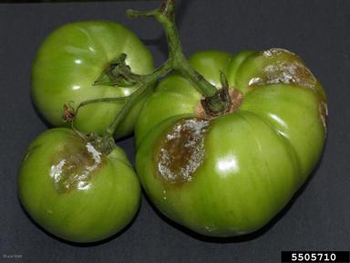
Bruce Watt, University of Maine, Bugwood.org
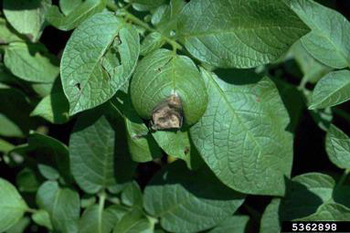
Where to look
Importers
Importation of infested seed potatoes is the most likely way that potato blight could make it to Australia.
Growers and home gardeners
Look for spotted leaves and rotting in potatoes, tomatoes and eggplants.
What to do
If you think you’ve found potato late blight:
- take a photo
- do not disturb infected plants and potatoes (this may be as simple as closing the doors on a shipping container, or preventing access to a field).