Skip to main content Skip to main navigation Skip to search
Home

Top navigation main

  • News & media
  • Jobs
  • Ministers
  • Contact us
Main menu

AWE Main

  • Agriculture and land
    Agriculture and land Building stronger and more sustainable agriculture, fisheries, forestry and land care.
    • Animal health
    • Climate change and agriculture
    • Farming, food and rural support
    • Fisheries
    • Forestry
    • Levies and charges on agricultural products
    • Mouse infestation advice
    • Plant health
    Farmer in a wheat field at sunset

    Drought, disaster and rural support

    Farmers and rural communities face many risks to their business.

    Find out more

  • Biosecurity and trade
    Biosecurity and trade
    • Aircraft, vessels and military
    • Biosecurity policy
    • Cats and dogs
    • Exporting
    • Importing
    • Pests, diseases and weeds
    • Public awareness and education
    • Trade and market access
    • Travelling or sending goods to Australia
    • Report a concern
    Brown marmorated stink bug

    BMSB Seasonal Measures

    Australia has strengthened seasonal measures to manage the risk of BMSB.

    View our seasonal measures

  • Science and research
    Science and research Undertaking research and collecting data to support informed decisions and policies.
    • Australian Bureau of Agricultural and Resource Economics and Sciences (ABARES)
    • Plant Innovation Centre
    Abares

    ABARES Insights

    Get 'snapshots’ of agricultural, forestry and fisheries industries, or analysis of key issues.

    Find out more

  • About us
    About us We enhance our agricultural industries and trade, and manage the threat of biosecurity risks to Australia.
    • Accountability and reporting
    • Assistance, grants and tenders
    • Contact us
    • Fees and charges
    • News and media
    • Our commitment to you
    • Payments
    • People and jobs
    • Publications
    • What we do
    • Who we are
    Budget 2026-27

    Budget 2026-27

    The 2026–27 Portfolio Budget Statements were released on 12 May 2026.

    Find out more

  • Online services
    Online services We do business with you using online platforms. This makes it easier for you to meet your legal requirements.
Department of Agriculture

Breadcrumb

  1. Home
  2. About us
  3. News and media
  4. Mastering biosecurity – inaugural Indigenous Rangers Biosecurity Masterclass held in Darwin

Back to news - AWE

  • Back to news

Mastering biosecurity – inaugural Indigenous Rangers Biosecurity Masterclass held in Darwin

  • Newsletter
  • Biosecurity
  • First Nations
18 May 2026

Coming from as far west as the Kimberley coast and from the top of the Northern Territory’s Arnhem Land, 24 Indigenous Rangers gathered for the first Indigenous Ranger Biosecurity Masterclass in Darwin.
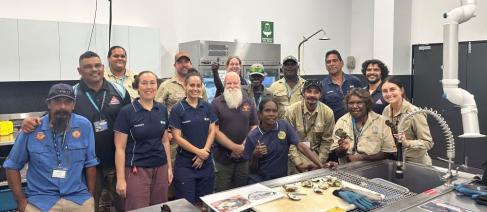
The inaugural indigenous rangers biosecurity masterclass.

Held over 2 days in early February, this advanced training program marked the latest step in the department’s efforts to expand professional development opportunities for experienced Indigenous Rangers. The program has been designed to strengthen the nation’s frontline biosecurity capabilities which protect Australia from new and emerging exotic pests, diseases and weeds.
Indigenous ranger using a pipette in a lab with a gloved hand.
Caption: From poo to flu, rangers practising safe handling of wildlife scats and collection of simulated influenza.


Renae Todd, Director of the Indigenous Ranger Biosecurity Program said, ‘Indigenous Rangers help us keep a top watch across a vast landscape. This masterclass is about equipping Rangers with the tools and connections to protect Country and our national biosecurity system.’

To be eligible for the masterclass, participants were required to have completed the Biosecurity Fundamentals Training and have 2 to 3 years’ experience working as a ranger.
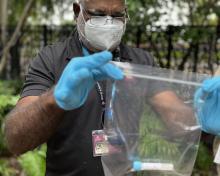
Indigenous ranger holding a specimen bag with gloved hands.

Over the course of the 2 days, rangers learned sophisticated strategic survey planning techniques and how to identify priority pests and diseases to support early detection and prevention. The participants also took part in scenario-based activities, including the development of Toolbox Talks, operational briefings and an elevator pitch on the Indigenous Rangers Biosecurity Program.
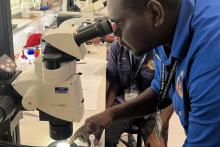
Indigenous ranger viewing a specimen through a microscope.
Caption: Participants learning how invertebrates are identified, including time on the microscope identifying samples with dichotomous keys.

Laboratory experience was also included in the program with scientists demonstrating how samples are processed using molecular techniques, and how the data collected supports national biosecurity reporting systems. Aquatic biosecurity also featured, with rangers learning how to conduct coastal and aquatic biosecurity infrastructure surveillance. This included the use of marine sensors known as settlement arrays as well as environmental DNA (eDNA) techniques, the sampling of genetic material in the environment to help detect the presence of pests. 

Manni Edwards of Goondoi Rangers said, ‘I found the biosecurity masterclass enjoyable and an effective way to deliver training. The on-Country field workshop in citrus collection was fantastic.’ 
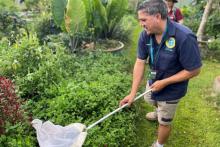
Indigenous ranger with butterfly net
Caption: Participants practise insect collection techniques

Jayvan Singleton, Senior Ranger Operations Manager from Dawul Wuru Aboriginal Corporation said, ‘Participating in the masterclass was a wonderful opportunity, especially being able to identify invasive species such as the Asian green mussel and black-striped mussel. Early detection is vital to stop these pests before they overwhelm and destroy our native species and waterways. This training has given me the technical confidence to monitor our coastlines more effectively and to share this knowledge with my team and community.’
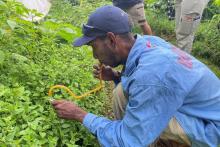
Indigenous ranger aspirating biosecurity matter through a hose.

The launch of the masterclass represents a major milestone for the department in strengthening northern Australia’s biosecurity capability and improving the quality and consistency of biosecurity data collected by ranger groups. 

Masterclass attendees received a certificate of completion, recognising their contribution to safeguarding Australia’s environmental and agricultural assets.
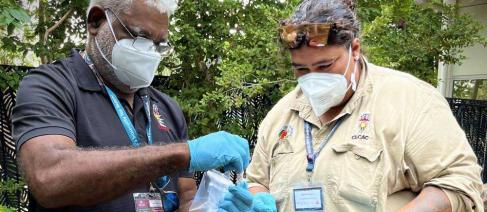
2 masked indigenous rangers viewing and discussing a specimen tube.
  • Share on Facebook
  • Share on Twitter
  • Share on LinkedIn
  • Email
  • Copy link

Related

Decorative

Nominate now for the 2026 Australian Biosecurity Awards

  • Newsletter
  • Biosecurity
05 May 2026
Detector dog

Detector dog teams protect Australia from exotic animal diseases

  • News
  • Biosecurity
01 May 2026
Decorative image

Inaugural National Biosecurity Strategy Annual Report released

  • News
  • Biosecurity
30 April 2026
Thanks for your feedback.
Thanks! Your feedback has been submitted.

We aren't able to respond to your individual comments or questions.
To contact us directly phone us or submit an online inquiry

CAPTCHA
This question is for testing whether or not you are a human visitor and to prevent automated spam submissions.

Please verify that you are not a robot.

Skip
Page last updated: 18 May 2026

We acknowledge the continuous connection of First Nations Traditional Owners and Custodians to the lands, seas and waters of Australia. We recognise their care for and cultivation of Country. We pay respect to Elders past and present, and recognise their knowledge and contribution to the productivity, innovation and sustainability of Australia’s agriculture, fisheries and forestry industries.

Artwork: Protecting our Country, Growing our Future
© Amy Allerton, contemporary Aboriginal Artist of the Gumbaynggirr, Bundjalung and Gamilaroi nations.

Footer

  • Contact us
  • Accessibility
  • Disclaimer
  • Privacy
  • FOI

© Department of Agriculture, Fisheries and Forestry

Facebook X LinkedIn Instagram