
Seeds for sowing exported from all countries via all arrival modes must comply with the following conditions, unless the seed meets the exclusion criteria:
- inspected offshore by a government official of the exporting country, and
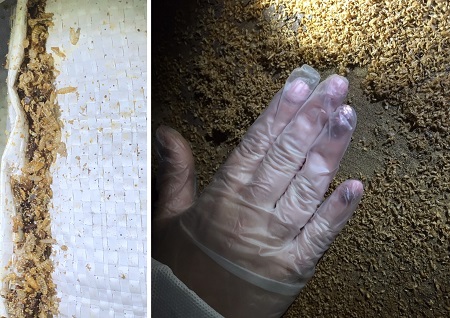
- certified on a phytosanitary certificate as being free from any listed species of Trogoderma (whether live, dead or exuviae) in Australia’s list of Trogoderma species of biosecurity concern.
For the full list of import conditions refer to BICON. Failure to comply with the measures may result in the destruction or export of the goods on-arrival in Australia.
Important: Some seeds for sowing are not permitted to be imported into Australia via certain arrival modes.
The following seeds for sowing are not subject to the khapra beetle measures:
- High risk plant products that are imported for research purposes coming as low value freight (less than $1000). OR
- Other risk plant products that are imported for research purposes arriving via all entry modes. OR
- Seeds that will be sown in an approved arrangement site operating under a process management system approved arrangement or the Government post-entry quarantine facility at Mickleham, Victoria. Refer to BICON for information on whether your species of seed meet the criteria for this exclusion.
To demonstrate the products meet the criteria for each of these exclusions, importers must provide:
- a statement that the consignment is intended for research purposes
- the name of the facility where the research will be undertaken in Australia.
Seeds that are listed as high-risk plant products are not permitted to be imported via the following arrival modes:
- international mail articles (including items posted using Express Mail Service)
- unaccompanied personal effects
- accompanied baggage carried by international travellers (including crew) via sea or air
- low value freight (less than A$1,000) imported for personal use.
All imported seeds for sowing are required to be accompanied by a phytosanitary certificate that includes the following additional declaration:.
“Representative samples were inspected and found free from evidence of any species of Trogoderma (whether live, dead or exuviae) in Australia's list of Trogoderma species of biosecurity concern”.
Pelleted or coated seeds may be certified by a government official of the exporting country based on the inspection of a bare seed sample of an identified seed lot.
Where no bare seed is available, an importer may apply for an import permit through BICON. An importer will be required to submit the following information to support their application:
- details of the pelleting or coating process
- quality control processes to manage stored product pests
- other relevant information that contributes to the management of biosecurity risk.
The department will consider this information in deciding whether the biosecurity risk can be managed to an acceptable level without a phytosanitary certificate.
See. Secure. Report.
If you suspect you have seen khapra beetle or anything unusual please report it, even if you are not sure.
Get in touch
If you want to receive updates on the urgent actions register to receive BICON alerts and IANs.
For any questions, please contact us on 1800 900 090 or via email at imports@aff.gov.au (please title the subject line of the email with ‘Plant Tier 2 – khapra urgent actions’).