
Australia’s agricultural industry is taking climate change seriously.
Farmers, industry groups, supply chains, banks and research organisations are working together to reduce greenhouse gas emissions. They are putting money into new technology and innovative farming methods to help reach national climate goals (DCCEEW).
Why the industry is making these changes
Australian farms produce top-quality food and fibre. ABARES reports around 70% of this is exported. Global marketplaces are changing. Supply chain actors like agrifood businesses and banks are increasingly working with their suppliers and customers to reach their own emissions reduction targets.
Business researchers are reporting that the majority of 136 of the largest global agrifood companies (BloombergNEF) have made net zero commitments or set emissions reductions targets, some of which will impact global food and fibre supply chains.
Examples of organisations with scope 3 emissions reduction targets or other climate-related ambitions
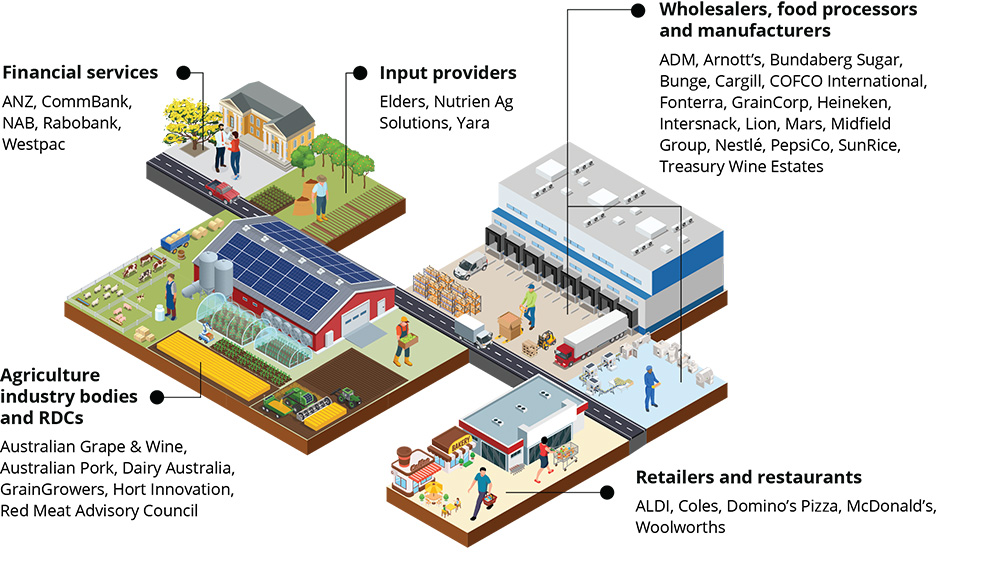
Scope 3 emissions are indirect emissions that occur in the upstream and downstream activities of an organisation. For these organisations, emissions on farms count as part of their scope 3 emissions.
This means managing emissions is becoming more important for farm businesses. Exploring emissions management for your property can help you prepare for potential changes in global supply chains.
Climate-related financial disclosures
As mentioned above, many agrifood companies are voluntarily committing to reduce emissions. The introduction of climate-related financial disclosures is further encouraging industry to take steps to manage emissions.
In 2024, Australia introduced requirements for large businesses and financial institutions to disclose material information on climate-related financial risks and opportunities. The new requirements are being phased-in over 3 years. They have already started for some very large businesses.
The key things for you to know are:
- Most Australian farmers will not have any direct legal obligations under the climate-related financial disclosure rules.
- The businesses that need to report are companies that meet two out of the three requirements:
- the company has earned revenue of $50 million or more
- the company has assets of $25 million or more
- the company has 100 or more employees.
- The new reporting rules do not require large businesses or financial institutions to collect farm-level data from their suppliers and customers to meet the reporting requirements. Businesses that must report can use industry averages or secondary data.
This fact sheet (DAFF) on climate-related financial disclosures shows what these changes could mean for farmers. ASIC has also published a regulatory guide alongside a host of information on sustainability reporting requirements on their website.
Emissions intensity
Emissions intensity is a way to measure the emissions associated with a unit of output, for example emissions per tonne of grain produced, or per head of cattle.
Emissions intensity is expected to become more relevant for food companies and financial institutions like banks over time. This is because the emissions associated with the products they purchase or activities they finance are counted as part of their own greenhouse gas emissions account.
ABARES reports that Australia typically has low on-farm emissions for a range of agricultural products. As Australia exports around 70% of agricultural production, producing low emissions intensity products may make them more attractive to some international markets.
Investors and consumers are increasingly demanding sustainability credentials in global food systems (ABARES). Reliable emissions intensity data is one way you can show how your products are better for the environment.
Find out more about understanding your emissions.
Industry sustainability frameworks
Sustainability frameworks are used by organisations to show how they are meeting environmental, social and governance (ESG) expectations, including expectations on emissions management. Understanding the sustainability frameworks created by industry can guide you on where to focus your emissions management efforts and how to demonstrate sustainable farming.
The Australian Agricultural Sustainability Framework
The Australian Agricultural Sustainability Framework (AASF) is a national project. It is led by the National Farmers Federation and backed by the Australian Government.
It provides a clear and consistent way to describe sustainability in Australian farming. This helps everyone—from farmers to supply chains—to speak the same language about sustainability goals, including climate goals such as emissions reduction.
The framework:
- helps farmers demonstrate responsible and sustainable farming
- helps people in supply chains, finance, and the community understand what matters most to farmers
- guides farmers on where to focus their sustainability efforts
- aligns with global standards to give international buyers confidence in Australian farming
- builds on existing industry programs
- helps tell Australia’s sustainability story both locally and globally.
The AASF aims to meet global standards for ESG expectations. It’s the first tool made just for Australia and shows how the farming industry is uniting for sustainability.
Learn more about the AASF:
- See an illustration of the AASF framework
- See more information on the principles and criteria of AASF.
Commodity specific sustainability plans
Many farming sectors in Australia have created their own sustainability plans. These plans show commitment to sustainability and many aim to manage emissions and store more carbon.
Examples of sustainability plans in different sectors:
- Beef: Australian Beef Sustainability Framework
- Cotton: Australian Cotton Sustainability Framework
- Chicken meat: Chicken Meat Sustainability Strategy
- Dairy: Australian Dairy Sustainability Framework
- Eggs: Australian Eggs Sustainability Framework Report
- Grains: Australian Grain Industry Sustainability Framework
- Horticulture: Australian-grown Horticulture Sustainability Framework
- Pork: Australian Pork Environmental Sustainability Framework
- Sheep: Sheep Sustainability Framework
- Wine: Sustainability | Wine Australia
These industry initiatives work alongside a range of efforts by the Australian government (DCCEEW) and state and territory governments.
Prepare for potential changes
Farmers are experienced at adapting to new market demands, like:
- animal and human health
- sustainability
- consumer tastes and preferences.
Global efforts to reduce emissions will impact market expectations, how supply chains operate, and what consumers demand (DAFF). This will affect Australian agriculture. A proactive approach to lowering your emissions will position you to harness new opportunities and maintain access to markets and investments.
Visit ways to reduce emissions for more information on what you can do to prepare.
You also can talk to suppliers and buyers in your supply chain and bank about incorporating emissions-related decisions into your farm business planning. They might be able to help you prepare for future opportunities and changes.