
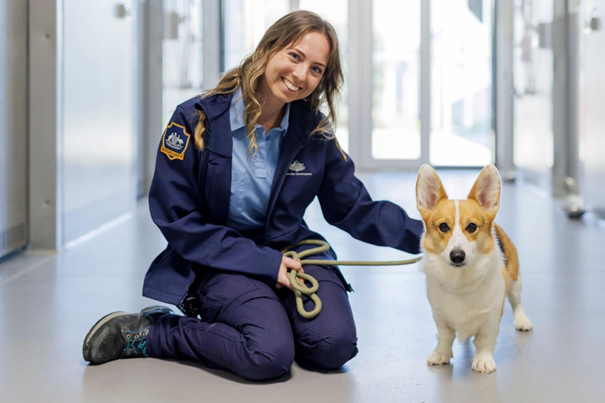
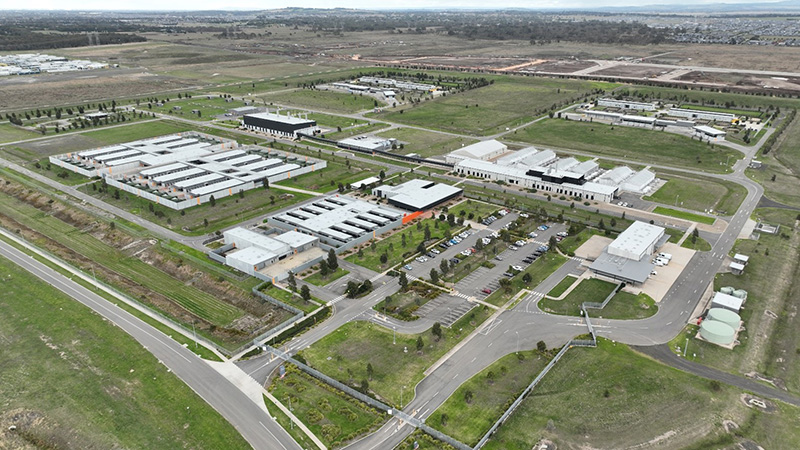
Cats and dogs must undergo a quarantine period in Australia. We provide this service at the Post-Entry Quarantine Facility in Mickleham near Melbourne, Australia.
Our facility provides high quality care for your cat or dog during quarantine.
Read more about quarantine and fees.
Read more about bringing cats and dogs to Australia.
Take a behind-the-scenes tour of our Post Entry Quarantine facility in Mickleham, Victoria in the following video.
Tim: Welcome to post entry quarantine – our world-class biosecurity facility for plants and animals entering Australia.
This is where your pets are cared for, and diseases like rabies are prevented from entering the country.
Animal handler: [feeding dog] Over here, over here, sit, good boy, there you go! You’re not hungry?
Tim: I’ve been lucky today to come to our quarantine facility for cats and dogs that have flown into Australia and to meet a bunch of the handlers that are caring for them. This is a place that’s full of love for your pet. Each pet has its own individual accommodation with heated floors and bedding, and they’re given lots of time outdoors to exercise.
Animal handler: The best part of the job is looking after the animals really. I love animals, I think we all do here so, being able to care for them, making sure they get the right care, um, is probably the best part of the job.
We’re all trained to monitor them quite closely for any health conditions or anything that we are concerned about so we will be in contact if we are concerned. So, yeah, just trust us.
Tim: Most pets come here to our quarantine facility in Victoria. It’s a sophisticated and safe facility where our biosecurity staff get to do exactly what they love best: care for animals.
When the quarantine period is over, it’s time for owners to reunite with their loved pet, like Watson’s owners who are so excited to see him today after bringing him from the United States.
Animal handler: [speaking to Watson’s owners] are you excited?
Watson’s owners: We’re so excited!
[Owners interacting with dog] Good boy, you look so great, you look so healthy! You can tell he is taken care of really well.
They kept us updated quite a bit. We got quite a few emails and also you know, telling us how he was doing, and how much of a happy dog he is, and I think that made us very comfortable with it all.
Tim: So, if you’re importing a cat or a dog into Australia make sure you follow all our Biosecurity rules. And help keep Australia rabies free.
Government operated cat and dog post entry quarantine services are provided at Mickleham, in Melbourne, Victoria.
Also accepted at the facility are:
- Avian
- Horses
- Plants
- Ruminants
- Bees.
The facility is staffed within the daylight hours of 0800 and 1600. Care is provided during these hours; cats and dogs are not monitored outside of these hours.
DO NOT create a reservation without a valid import permit.
You can make a booking at the Mickleham PEQ Facility once we have granted your animal an import permit. For more information, please see how to import a cat or dog.
Note: We do not recommend you use the Post Entry Biosecurity System on a mobile phone or tablet. Please use a desktop web browser to make a booking.
Requesting the ok to forward
Your reservation must be confirmed before an OK to forward request can be assessed.
Once you have confirmed your PEBS reservation, please contact your airline regarding the OK to Forward request.
The OK to Forward request must be sent directly to PEQservices@aff.gov.au by your airline for assessment and approval.
OK to Forward requests will only be accepted from an airline and must be approved prior to your pet’s departure.
The approval process allows us to:
- Verify that the flight details we have recorded are accurate
- Confirm that the flight is within accepted operating times
- Receive the Airway Bill (AWB) number, which enables your pet’s flight to be tracked once they have been lodged.
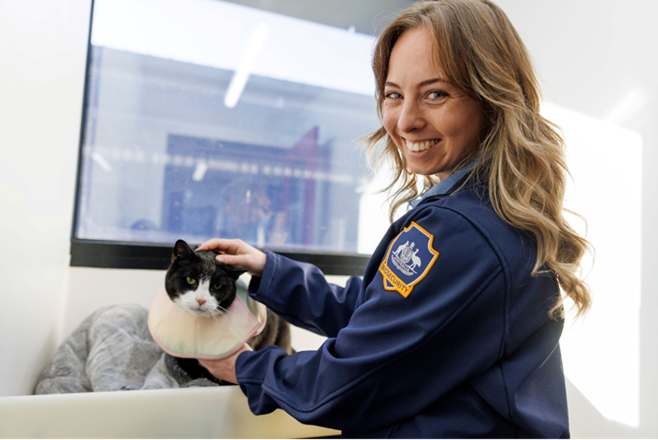
The Australian post entry quarantine facility provides an excellent standard of care to cats and dogs and can administer basic medication to cats and dogs with stable illnesses.
If your cat or dog has special care requirements, you and your veterinarian MUST consider the information on this page and determine if pet is suited to international transport and post-entry quarantine within Australia.
Does my animal have special care requirements?
A special care animal is a cat or dog that:
- has existing medical conditions
- requires medication
- requires special diets
- is elderly (cats older than 12 years, small dogs older than 10 years or large dogs older than 7 years)
- is or might be pregnant at the time of import
- has known behavioural issues e.g. is nervous or fearful during veterinary visits, takes behaviour modifying medication or is trained specifically for security, military or police purposes
- has any other special needs or requirements.
Please contact Post Entry Quarantine if your pet has any of the following conditions:
- Diabetes
- Heart and lung disease
- Implants or external devices
- Open wounds, bandages and casts
- Epilepsy or seizure conditions
- Mobility and body function issues
- Behavioural considerations
- Any other medical conditions
What should I consider before importing my special care animal to Australia?
Whilst your animal will be well cared for during its time at the Australian post-entry quarantine facility, you should think about the stress that your animal may experience during international travel and changes to its routine. Consider whether your cat or dog can cope with:
- travelling in the cargo hold of the plane
- stress associated with being exposed to unfamiliar environments and sensations (sound, vibrations, scents)
- being unmonitored for extended periods whilst in transit and under the care of the aircraft operator.
Stress may exacerbate pre-existing conditions or worsen the health status of animals with special care requirements. Cats and dogs with certain health issues are more likely to arrive unwell or in poor condition.
Cats and dogs are transported as manifest cargo within the cargo hold of the aircraft. They are not monitored in transit and may miss scheduled doses of medications.
Cats and dogs that are unwell on arrival, or become unwell during quarantine, may require private veterinary attendance or transfer to a private veterinary facility at the expense of the person in charge of the animal.
Talk to your veterinarian about whether your cat or dog can cope with international travel and quarantine in relation to its special care requirements.
It is a condition of import that cats and dogs undergo a final pre-export veterinary examination by a government-approved or official government veterinarian within 5 days of the date of export to Australia. At the time of the final pre-export veterinary examination, cats and dogs must be:
- certified as healthy and fit to travel to Australian territory and undergo quarantine
- free of clinical signs of infectious and contagious disease.
You should reconsider the proposed import of your cat or dog if they are not healthy and fit to safely travel to Australia and undergo quarantine. You may need to delay your animal’s import to Australia until their health has improved.
Booking quarantine for animals with special care requirements
You must tell us if your animal has a special care requirement when you confirm your animal’s quarantine stay. We need this information to care for your animal. Please ensure the information is current at the time of your animal’s arrival in Australia.
- We do not recommend importing sick or very elderly animals. You should consider your animal's age and condition, and how they will cope with long distance travel and climatic stress, when deciding to send your animal to Australia.
- It is the department’s experience that even animals with well managed chronic medical conditions can often arrive in Australia in a state of distress and poor health. International travel can cause them to de-stabilise and rapidly deteriorate. In accordance with the Australian live animal import conditions, animals must be transported to Australia by air as manifested cargo, in a transport crate in the cargo hold of an aircraft. During this travel, animals will be subject to a heightened level of stress with which they may not be able to cope with due to their pre-existing medical condition. Additionally, animals may be unable to receive medication during transport to Australia which may further exacerbate their condition on arrival.
- As a pet owner, you must consider whether it is in your pet’s best interests to be subject to long distance travel and the stay in quarantine. If you elect to import your pet with an underlying medical condition, the department strongly recommends that you arrange for a private veterinarian to examine your pet after their arrival at the quarantine facility. The private veterinarian can determine whether changes to your pet’s care or medication are necessary following any stress associated with importation.
- If your animal has a chronic health condition that requires close monitoring, such as epilepsy or diabetes please email us at contact us as soon as you have submitted your reservation. This will ensure notes are made on the reservation and the biosecurity officer caring for your pet can be informed.
- You must notify us if your animal has any medical requirements when making your quarantine booking. In such circumstances, we will require additional information from your treating veterinarian to correctly manage the condition by completing an Animal medical declaration outlining the animal’s condition/s and care requirements which can be submitted to peqservices@aff.gov.au
- You must notify the peqservices@aff.gov.au if your animal is diagnosed with a medical condition after the import permit has been granted, to ensure that your animal's welfare and medical requirements can be managed at the facility.
- If your animal requires significant medical assistance by our staff, supervision fees may apply. Please contact the facility contact us to discuss your animal’s needs.
- The animal must be certified as fit to travel and undergo quarantine and meet all import conditions in full before departing the country of export.
- Pets remain subject to biosecurity control until such time as they have completed the post-entry quarantine period and are in full compliance with the conditions of import. In the very rare instance where a pet dies in transit to Australia, on arrival or during the quarantine period, the post entry quarantine facility will contact the person in charge with the next steps.
- When a pet dies in transit to Australia, on arrival or during the quarantine period the department may require a postmortem examination to be conducted to determine if the cause of death is from a disease of biosecurity concern.
We follow strict guidelines for administering medication during quarantine. This ensures the health and safety of all animals in our care.
Cytotoxic and chemotherapy medication restrictions
We DO NOT administer cytotoxic or chemotherapy medications.
If your animal requires these medications, you must:
- consult your veterinarian BEFORE ARRIVAL at PEQ to discuss alternative treatments
- stop these medications at least 7 DAYS BEFORE ARRIVAL at PEQ.
Veterinary instructions
We will only administer medication under the direction of your treating veterinarian.
You must provide a completed Animal medical declaration at the time of booking.
This form must include:
- your animal’s relevant medical history
- name and type of medication
- dosage and frequency
Labelling requirements
All medications must be clearly labelled by a veterinarian in English and include:
- details of the veterinarian and veterinary clinic
- animal’s name
- owner’s surname
- name of the medication
- dose rate
- frequency
- route of administration (oral, topical, ear or eye drops)
- date when medication was dispensed
Administration and supply
We WILL NOT administer unlabelled or unclear medications.
We WILL NOT split or halve capsuled medications.
We WILL NOT administer intravenous, subcutaneous or rectal medication.
Medication cannot be given ‘as needed or ‘as required’’
We DO NOT supply medication. You can arrange for a private veterinarian to prescribe and supply medication. Supervision fees will apply.
We administer medications between 8:00 AM and 4:00 PM only.
Animals with conditions such as diabetes or epilepsy, may usually be medicated outside these hours. Your veterinarian will need to adjust the treatment schedule before import into Australia.
If you need more information, contact us or speak with your veterinarian.
Refrigerated medication
You cannot send refrigerated medication with your animal.
You may arrange for a private veterinarian to bring the medication to the quarantine facility when your animal arrives. Supervision fees will apply.
Imported Medication
Due to Australian legislative requirements and the potential biosecurity risk associated with imported veterinary medication, we may destroy any imported medication following the release of your animal, including medication that may be commercially available in Australia.
Only send medication in a quantity enough to treat your animal during the quarantine.
You should check whether your animal's current medication is available in Australia. If it is not, you may wish to consider changing to an equivalent medication that is available in Australia.
You must contact us if your dog is trained in any of the following:
- to bite a human’s body, or any object attached to a human, such as bite sleeves/suits
- is trained for security, military, police, or guard purposes, or is intended to be used for these purposes
- has undertaken training in dog sports involving biting, such as Schutzhund titled dogs - Sch, IPO, VGP and IGP.
A suitable handler MUST attend the PEQ facility to provide assistance in safe handling of your animal at the following times:
- To assist with initial arrival health examination;
- At the pre-release veterinary health examination, normally within two business days of the anticipated release from biosecurity control;
- The day of release from biosecurity control;
- Other times, where requested to assist with husbandry, examination or biosecurity non compliances.
You will need to liaise directly with your nominated handler and the quarantine facility to schedule attendance times.
The person-in-charge will be responsible for any costs associated with handler attendance (supervision fees will apply).
If you require information regarding suitable handlers, please contact us
The Post Entry Quarantine facility has the following flight arrival windows for animals booked for quarantine at Mickleham.
The accepted flight times for animal arrivals into Post Entry Quarantine are:
- Monday, Tuesday, Saturday and Sunday: accept arrivals between 5:00 and 14:30.
- Wednesday, Thursday and Friday: accept arrivals between 5:00 and 21:00.
Flights scheduled to land between 21:00-05:00 AEST will not be accepted.
Out of hours collection fees will be charged for animals arriving on:
- Victorian or Australian public holidays
- Saturdays or Sundays
- Flights arriving after 14:30
- Flights arriving outside 05:00 – 14:30
If you require further information about available flights that arrive within the normal and out of hours timeframes, please contact your airline or shipping agent.
If you are unsure that your flight will be accepted, please contact us for further information.
Your animal will be collected on arrival into Melbourne airport for transport directly to the Post Entry Quarantine Facility.
You will receive an email notification to notify you that your animal has arrived safely, within 24 hours of arrival. We will contact you immediately if there is an issue with your animal on arrival. Please ensure your contact information is kept updated.
Government veterinarians check imported animals for diseases of biosecurity concern only.
Our government veterinarians do not provide:
- General care
- Consultations
- Dispense or prescribe medication for non-biosecurity issues
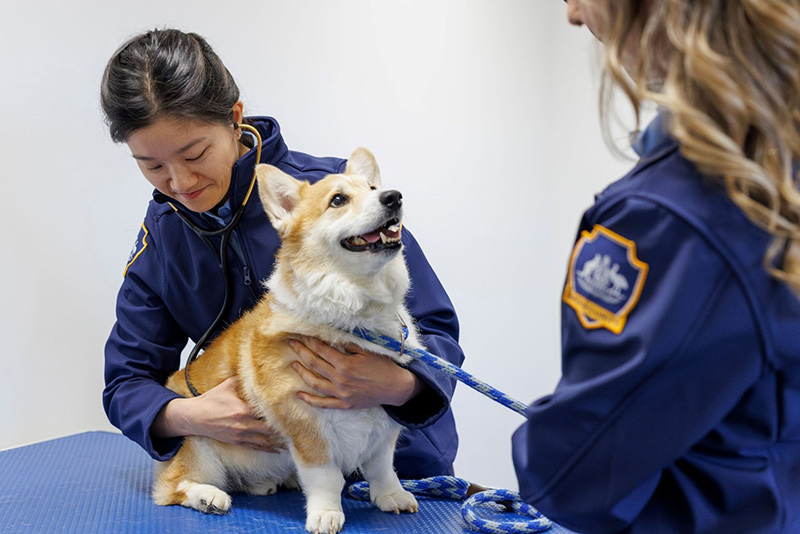
Arranging a private veterinarian
The person in charge is responsible for arranging a private veterinarian and any costs associated with:
- Private veterinary care (Supervision fees apply).
- Emergency veterinary treatment
You may arrange a private veterinarian if:
- Any health concerns are identified during the quarantine period.
- Your animal requires medication or a consultation (see Medicating animals in quarantine).
- Your animal has existing health conditions and requires a private veterinarian on arrival. Contact Post Entry Quarantine two weeks prior to arrival if this is required.
Emergency care
The Post Entry Quarantine facility does not have onsite veterinary facilities.
We will contact you or your authorised agent if urgent care is required, to authorise the transportation of your animal to the emergency veterinary hospital.
Your animal’s welfare will remain our priority. If we cannot contact you or your authorised agent, we will arrange emergency veterinary care without delay.
The person in charge is responsible for any costs associated with the emergency veterinary hospital.
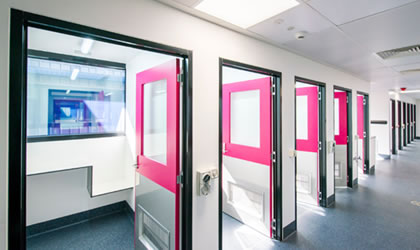
- Animals are housed in climate-controlled pens.
- Animals will be allocated an individual pen at the time of booking.
- If you are importing multiple animals, we will try to house same species (for example, two dogs) in adjacent pens, where possible.

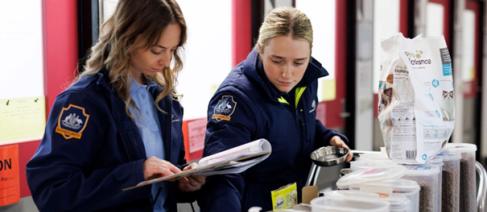
We are currently feeding:
Dogs:
Dry food:
Royal Canin Medium Adult Expert
Royal Canin Pro Expert Mini
Royal Canin Gastrointestinal High Fibre
Royal Canin Hypoallergenic
Royal Canin Anallergenic
Royal Canin Medium Puppy
Royal Canin Energy 4800
Wet food:
Royal Canin Gastrointestinal
Royal Canin Sensitivity Control
Royal Canin Hypoallergenic
Royal Canin Puppy
Cats:
Dry food:
Royal Canin Sensible
Royal Canin Indoor
Royal Canin Aroma
Royal Canin Kitten
Royal Canin Gastrointestinal
Wet food:
Royal Canin Indoor (Gravy and jelly)
Royal Canin Kitten (Gravy, loaf and jelly)
Royal Canin Instinctive (Loaf)
Royal Canin Sensitivity Control
Royal Canin Gastrointestinal
Please note, food provided at the Post Entry Quarantine Facility contains chicken and grain which we can only feed between 8:00am and 4:00pm.
Special Diet
If the provided food is not suitable for your animal’s health requirements, we would recommend that you supply your own pet food. Any food provided must be sourced from Australia. Please contact us for delivery information.
Do not send food with your animal. We will destroy any food sent with animals upon arrival due to the possible biosecurity risks associated with the food
- Please don’t send items to the facility. We do not take responsibility for any items sent to or left at the facility.
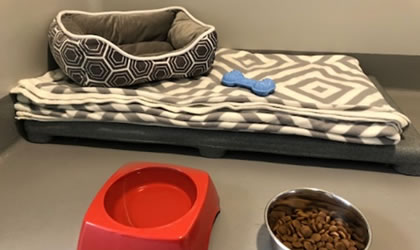
- We will destroy all bedding, soft toys, comfort items etc that travels with the animal in their transport crate upon arrival as they become soiled during the journey.
- We will provide bedding for cats and dogs to suit their breed and age.
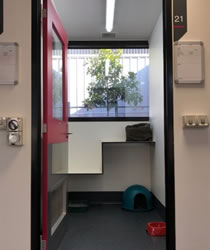
Visiting
- Under the current import conditions, most animals undergo 10 and 30 days in post entry quarantine. In this period, we are focused on providing the care your animal needs, while managing the administrative and biosecurity requirements to prepare your animal for release from biosecurity control. Due to the short quarantine isolation period, we do not permit visiting of animals in post entry quarantine.
Exercise
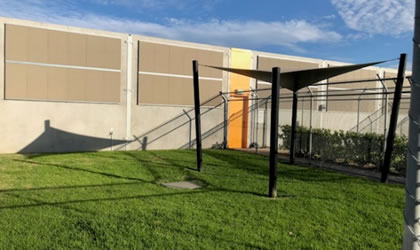
- We will attend to your animal’s exercise needs during their time in quarantine. The runs in the facilities are well set up and provide most animals with adequate room to exercise within their run.
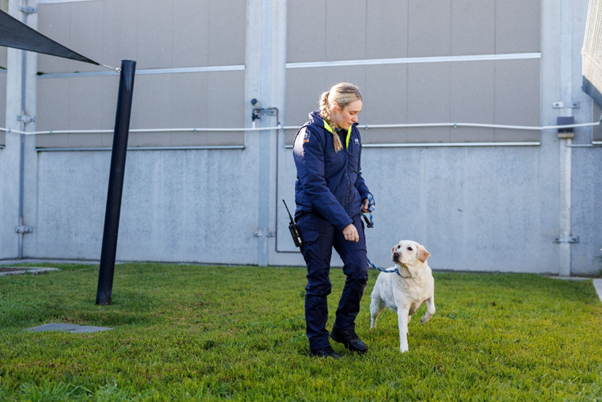
- We will groom and bathe animals during their quarantine isolation period for welfare or hygiene reasons only. If grooming is required for Biosecurity purposes, we will contact you to discuss a specialist grooming appointment. Supervision fees will apply.
- Owners may request their animals to receive specialist grooming during the quarantine isolation period. You can discuss this requirement with the Biosecurity officers. Supervision fees will apply.
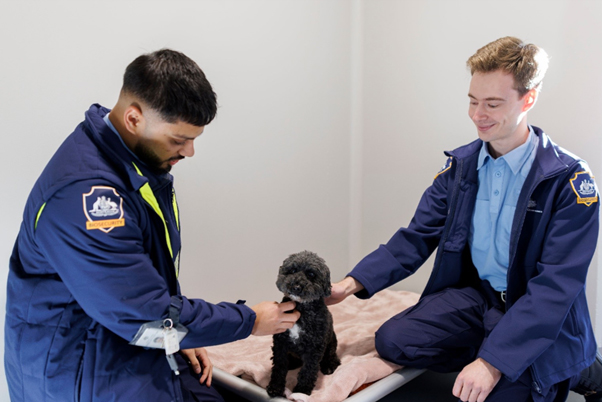
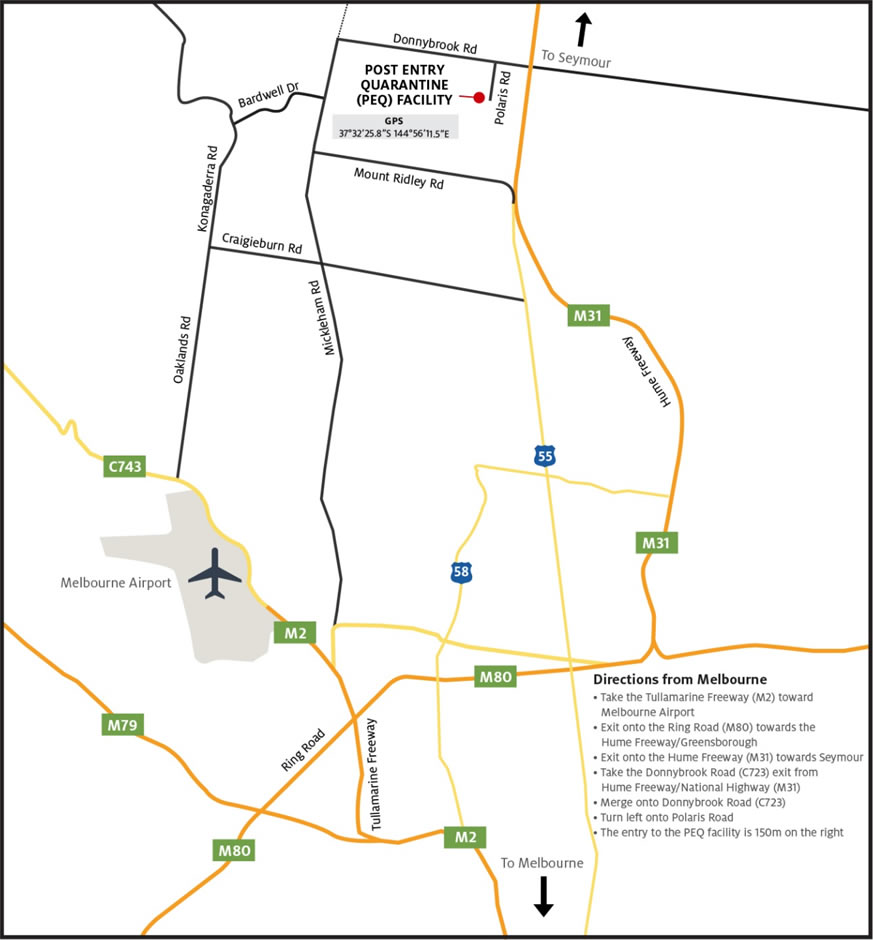
You/your authorised agent must collect your animal and their crate on the eligible release date. Animals can be collected between 10:00 and 12:00 hours.
Collection address
135 Donnybrook Road Mickleham VIC 3064, enter from Polaris Road.
Directions from Melbourne
- Take the Tullamarine Freeway (M2) toward Melbourne Airport
- Exit onto the Ring Road (M80) towards the Hume Freeway/Greensborough
- Exit onto the Hume Freeway (M31) towards Seymour
- Take the Donnybrook Road (C723)
- Turn left onto Polaris Road
- The entry to the PEQ facility is 150m on the right
- Entry is via the main gate, not the delivery gate – press the call button to speak to Security
Please note:
- Animals must be collected by the person named as importer on the import permit or their authorised agent.
- You must notify staff at the post entry quarantine facility of your authorised agent’s details before the eligible release date. Photo identification must be provided at the time of collection.
- The person in charge of the animal is responsible for the collection and removal of the animal transport crate from the PEQ facility. Forfeiture of the animal transport crate to the Department may incur additional fees for disposal.
- Cats must be released in their original crate; they cannot be transferred to an alternative crate upon release.
Your animal cannot stay beyond their eligible release date. If you cannot collect your animal on the release date, you must make alternate arrangements for their pickup, boarding and care. A pet transport agency can assist. Find out more about animal transport companies from the International Pet and Animal Transport Association (IPATA).
‘The person in charge of the animal’ is the person listed as the importer on the import permit. They are responsible for:
- ensuring the animal meets all import conditions. As a non- compliance may delay the animal’s release or require the animal to be exported out of Australia.
- collecting the animal on completion of the quarantine isolation period.
- paying all associated fees.
The importer may give permission, in writing, for someone else to act as their authorised agent.
Other persons may include a pet transport agency, family member or a friend. This must include what functions the agent is able to undertake.
- Receive information about an animal
- Collect the animal on completion of the quarantine isolation period
- Authorise private veterinary treatment if required
The importer is also responsible for ensuring contact details are always up to date.
In case of an emergency provide your Australian contact details.
For reservation created PRIOR to 17 October 2025
For reservation created AFTER 17 October 2025
If you have difficulty accessing these files, contact us for help.
Post Entry Quarantine Facility
Phone: 1800 900 090 or +61 3 8318 6700 (outside Australia)
Email: Post Entry Quarantine Services
Hours: Monday – Friday (8:00 – 16:00 hours AEST)
Weekends and Australian Public Holidays: Closed