

If you notice sick or dead birds or other animals, you should not touch them. If there are multiple sick or dead birds or other animals, take photos or a video.
Record your location and report it to the 24-hour Emergency Animal Disease Hotline on 1800 675 888.
You can find and download our resources in different languages and formats. Use these resources to educate and raise awareness of H5 bird flu.
Fact sheets
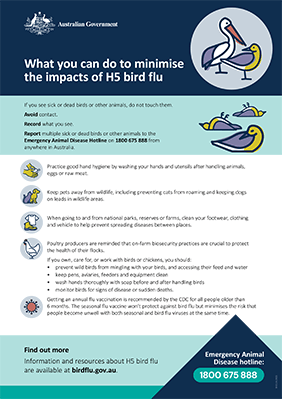
What you can do to minimise the impacts of H5 bird flu
If you have difficulty accessing these files, contact us for help.
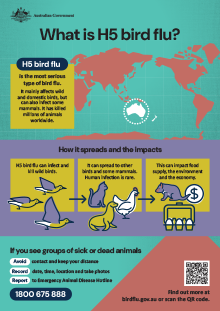
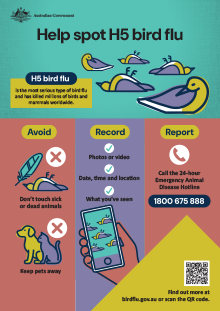
Help spot H5 bird flu
If you have difficulty accessing this file, contact us for help.
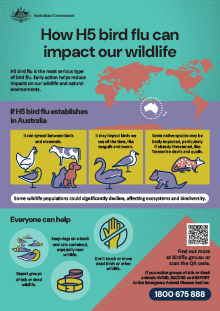
How H5 bird flu can impact our wildlife
If you have difficulty accessing this file, contact us for help.
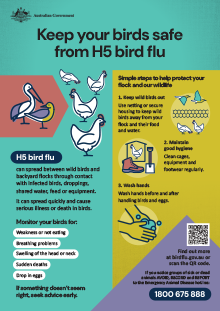
Keep your birds safe from H5 bird flu
If you have difficulty accessing this file, contact us for help.
Safe handling
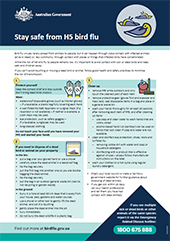
Stay safe from H5 bird flu
If you have difficulty accessing this file, contact us for help.
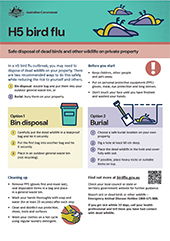
Safe disposal of dead birds and wildlife
If you have difficulty accessing this file, contact us for help.
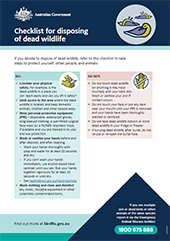
Checklist for disposing of dead birds and wildlife
If you have difficulty accessing this file, contact us for help.
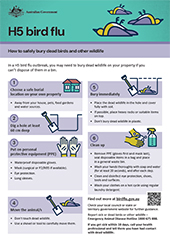
Safe burial of dead birds and wildlife
If you have difficulty accessing this file, contact us for help.
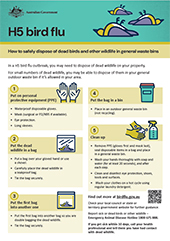
Safe waste bin disposal of dead birds and wildlife
If you have difficulty accessing this file, contact us for help.
Videos
Videos - educational
What is bird flu
Bird flu and your birds
Bird flu and your community
Bird flu and you
Videos - from the Australian Chief Veterinary Officer
Know what to do if you see sick or dead birds or animals
Know how to protect your pets from H5 bird flu
Know the signs of H5 bird flu and help protect your chickens
Know what to do if you see sick or dead animals while enjoying the outdoors
First Nations resources
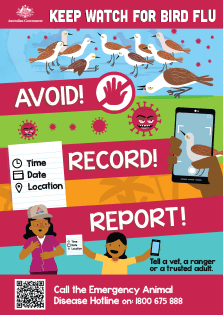
What you need to know about H5 avian influenza (bird flu) poster
If you have difficulty accessing this file, contact us for help.
Bird flu awareness – Keep watch for bird flu
Disclaimer: This animation may upset some viewers because it can impact totems, birds of cultural significance, and the health of Country.
One day, a group of friends are fishing.
Not far off, Jim notices a shore bird struggling, then wobbling, and finally collapses to the ground.
Jim jumps up to get a closer look, but Pam stops him, telling him that the bird may have a highly infectious virus called bird flu.
Seeing Jim's surprise, Pam explains that the birds migrating between countries can carry bird flu virus.
Lately, a nasty strain of this virus has been causing trouble globally, affecting chickens, wild birds, and other animals, including mammals such as dolphins and seals.
Jim and his friends learned that people occasionally catch the virus from handling infected birds.
To stay safe, Pam advises that they keep their distance and avoid contact with sick birds.
Bird flu may look like one sick or dead bird or many.
It affects ducks, migratory shore birds, sea birds, birds of prey, and domestic birds like chickens.
The group soon notices more sick birds, some wobbling and others already laying down.
Alarmed, they asked Pam what to do next.
She tells them to avoid record report, avoid contact with sick or dead birds, record the time, date, location of the sighting if you can, take some photos or videos and report to the relevant authorities as soon as possible.
You can also report your findings to a Ranger by security officer, government debt or trusted adult.
So keep watch and report any unusual signs or behaviours in wildlife, including any sick birds or increasing number of bird deaths in the area.
Posters
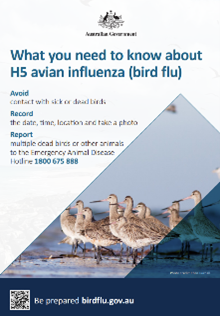
What you need to know about H5 avian influenza (bird flu) poster
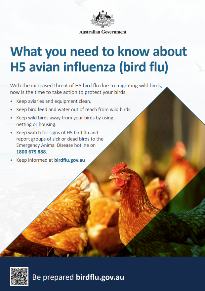
What you need to know about H5 avian influenza (bird flu) - Pet birds and chickens poster
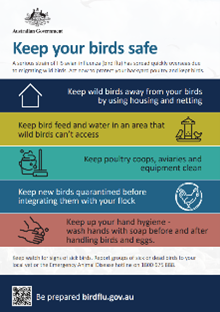
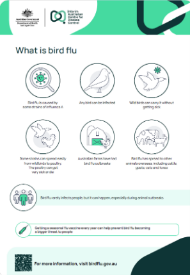
Bird flu toolkit for people who work with birds
If you have difficulty accessing these files, contact us for help.
Guides
H5 bird flu – public guidelines for carcass management
H5 bird flu – public guidance for disposal of dead wildlife
National Principles for wildlife carcass management – H5 bird flu event
Preparing for H5 bird flu – Norfolk Island
Preparing for H5 Bird flu Cocos Keeling Islands
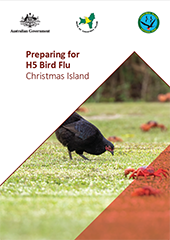
Preparing for H5 Bird flu Christmas Island
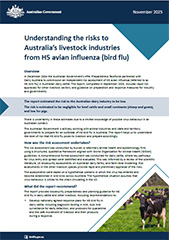
Understanding the risks to Australia’s livestock industries from H5 avian influenza (bird flu)
Postcards
What you need to know about H5 avian influenza (bird flu) – chicken owner postcard
What you need to know about H5 avian influenza (bird flu) - nature postcard
If you have difficulty accessing these files, contact us for help.
Social media content
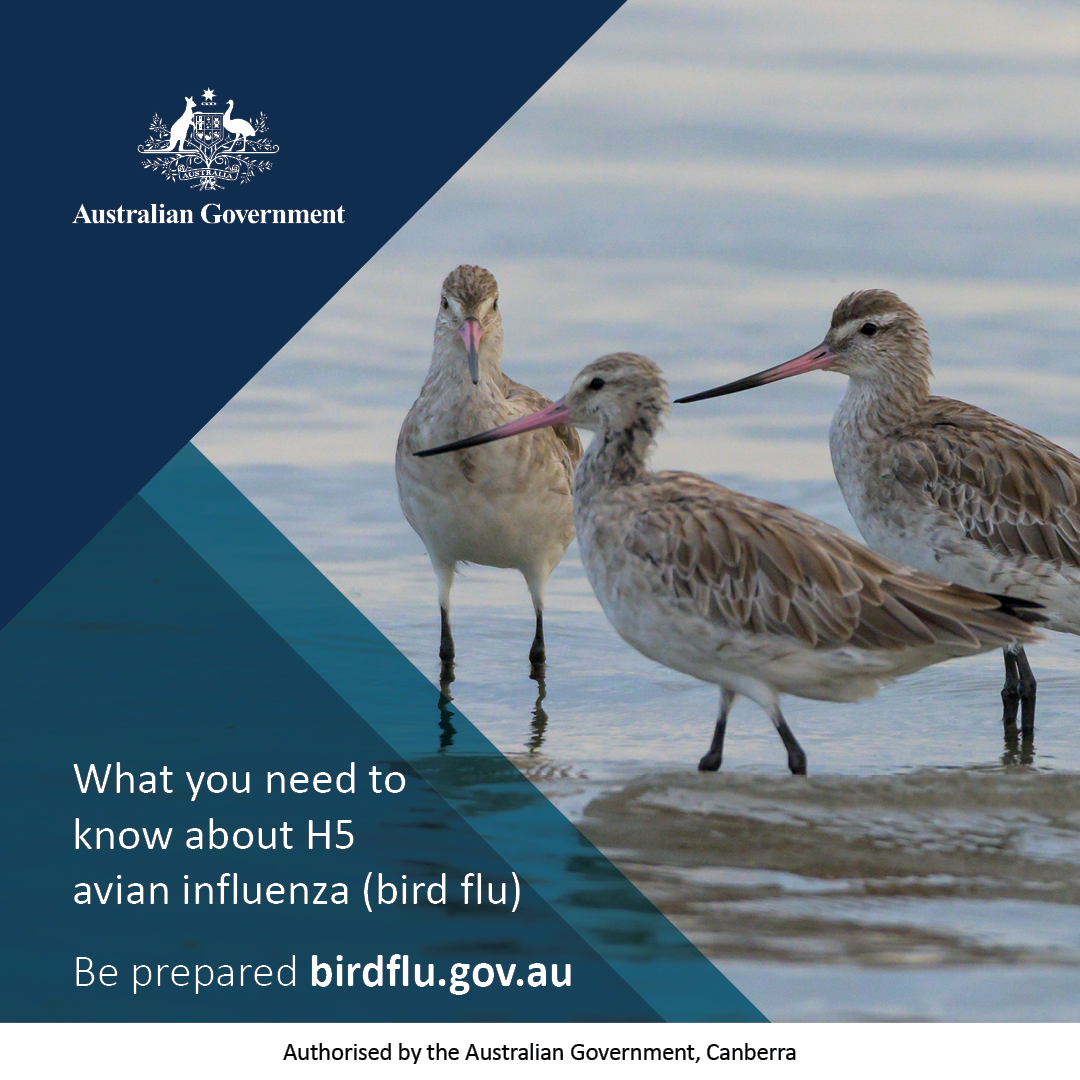
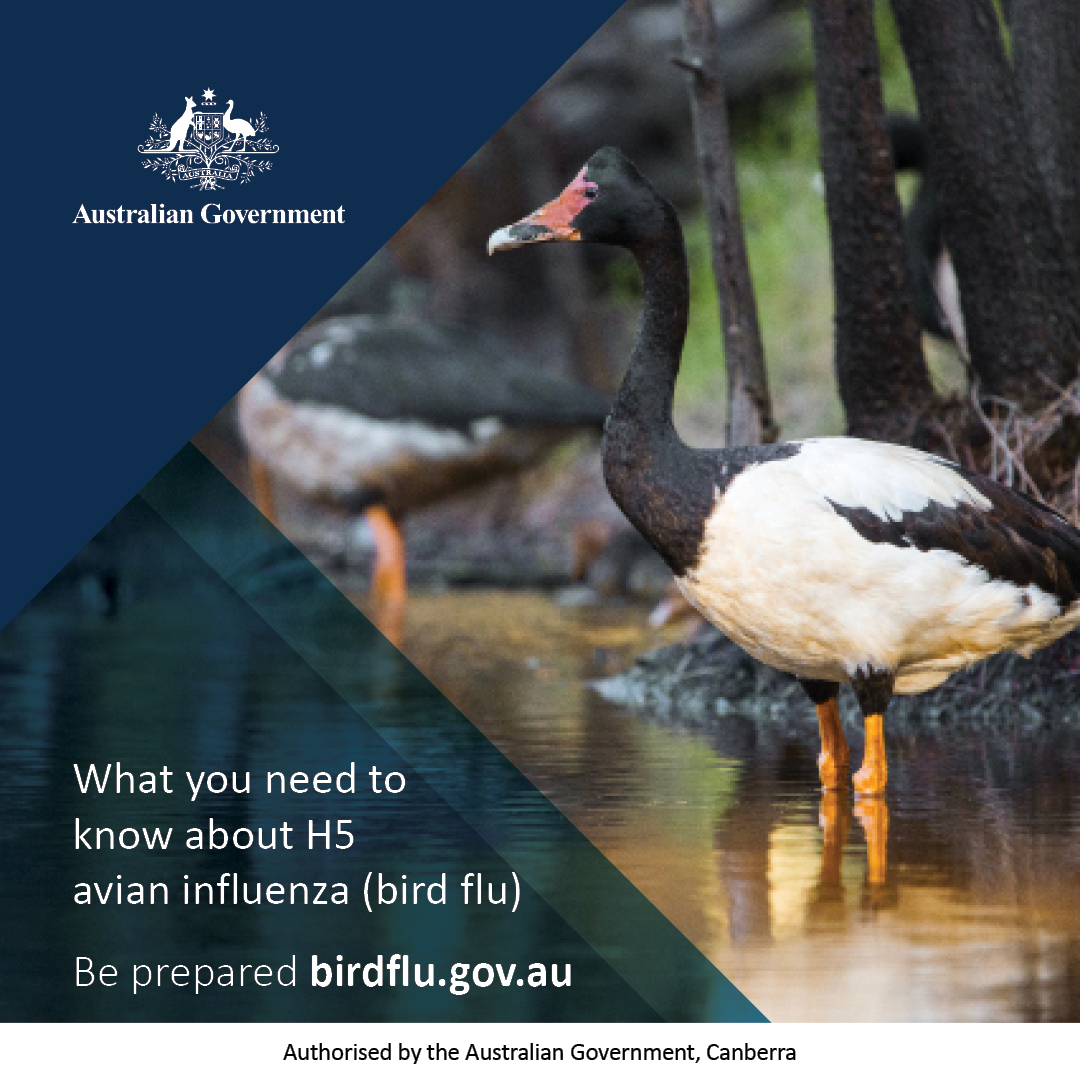
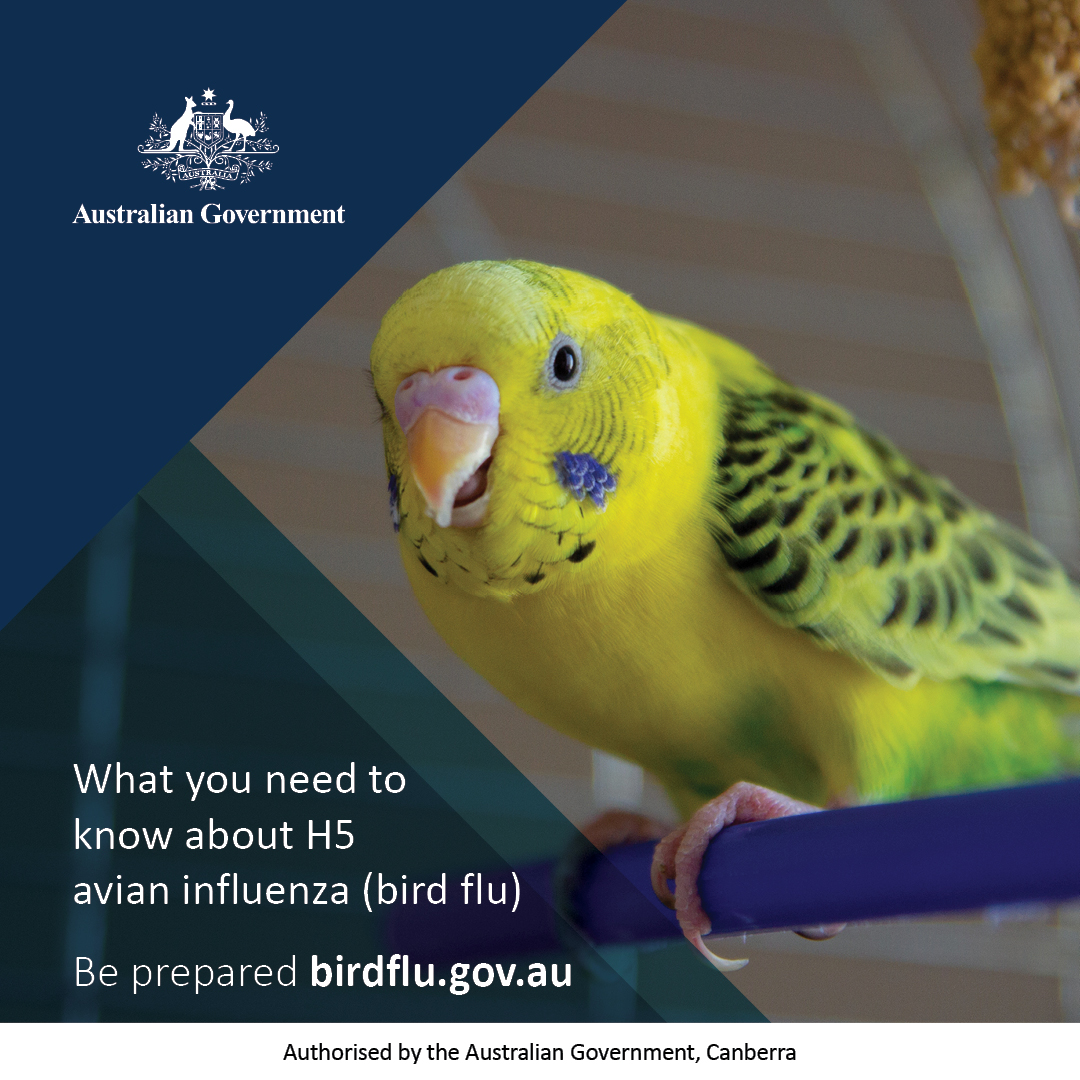
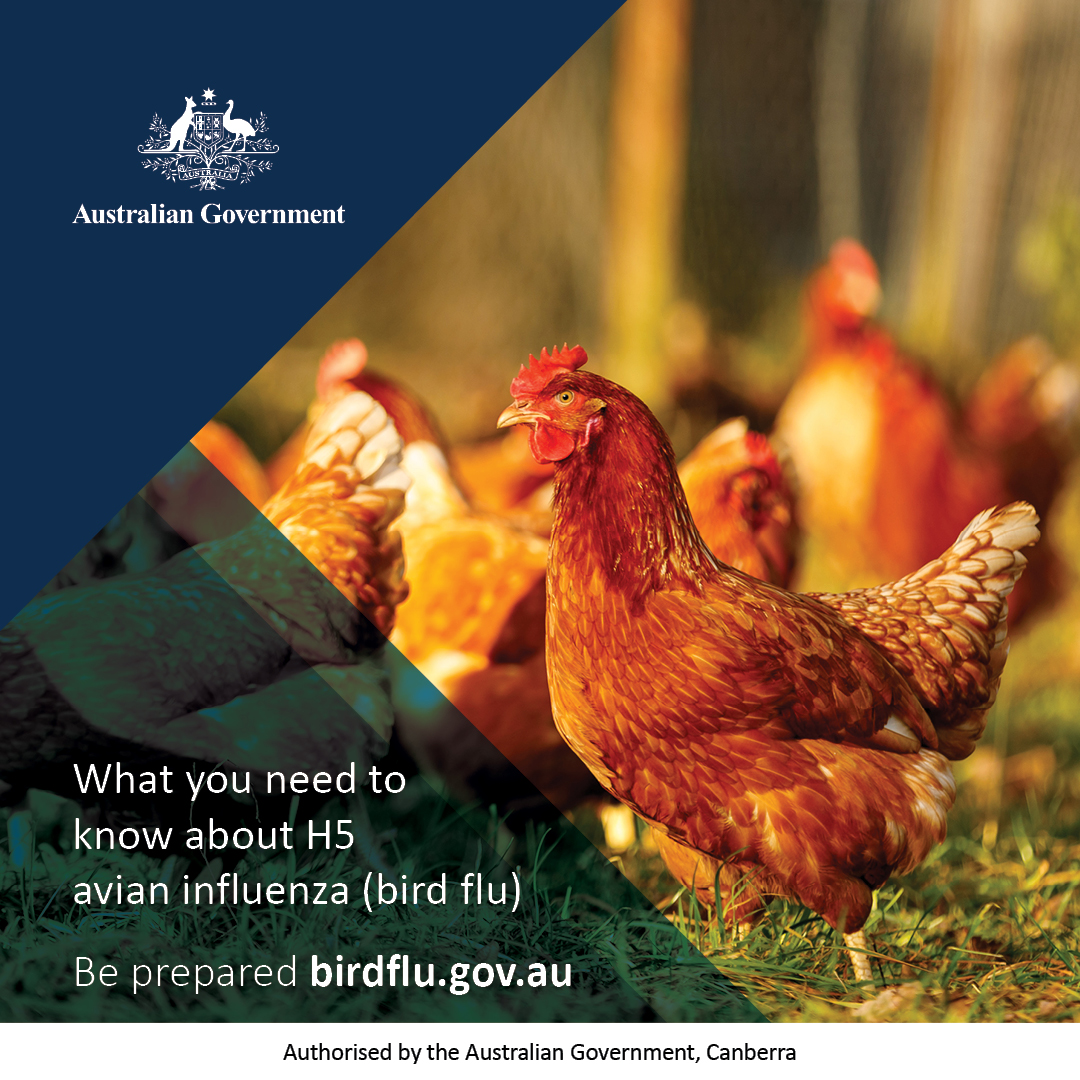
These social media tiles can be used on your social media channels to raise awareness of H5 bird flu.
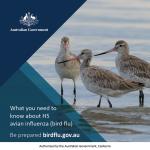
Migratory shore birds
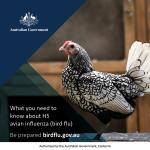
Agriculture society and show birds
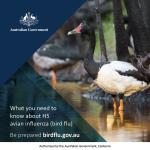
Magpie goose
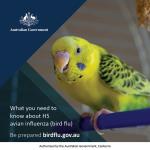
Pet budgie
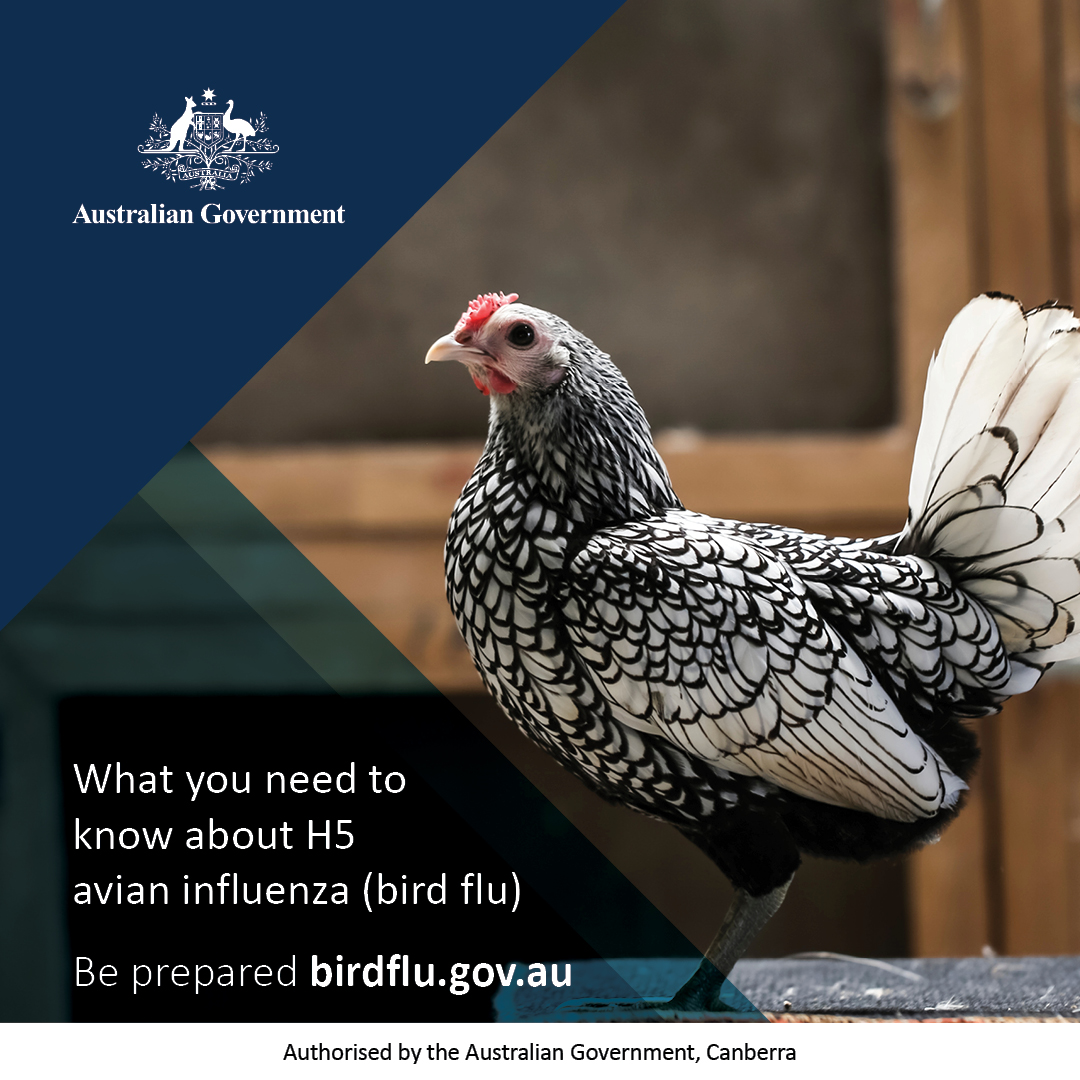
Backyard chickens
If you have difficulty accessing these files, contact us for help.
Webinars
Webinar: Preparing for H5 avian influenza (bird flu) - 2025
Download webinar video transcript
If you have difficulty accessing this file, contact us for help.
About us
This is a joint initiative by the Australian Government. It provides information on and raises awareness about bird flu and preparedness and response arrangements in Australia.