

The Department of Agriculture, Fisheries and Forestry (DAFF) helps protect Australia's unique environment, agricultural industries and way of life by maintaining our strong biosecurity system, supporting trade and market access, and managing risks at the border.
Biosecurity Operations works with industry to support the safe and efficient movement of goods through Australia's import pathways while managing biosecurity and imported food risks.
This page is a central resource hub for importers, customs brokers, freight forwarders, shipping operators and other stakeholders. Here you will find operational updates, guidance, forms, policies and other resources to help you understand and meet Australia's biosecurity and imported food requirements. Access the Broker Toolkit via the icon for quick access to key information and resources.
Our frontline staff assess and inspect imported goods, provide advice and support to industry, and work closely with stakeholders to manage risks while facilitating the movement of compliant cargo.
Regular engagement and clear communication help industry stay informed about operational requirements, regulatory changes and emerging biosecurity risks, supporting compliance and the efficient movement of goods across Australia's border.
Operational updates
Sharing information with our stakeholders helps us achieve our goals.
See our recent significant biosecurity operational updates. You can also check all import industry advice notices.
Check our imported food notices for updates on imported food safety requirements. Subscribe to be notified of new releases.
Approved arrangement (AA) operators, custom brokers, and importers of goods into Australia are reminded of their obligation to provide reasonable assistance during biosecurity inspections.
Eligible importers and brokers of CBIS are advised that the department is incorporating three new plant pathways onto the Compliance-Based Intervention Scheme (CBIS).
Clients who lodge Australian Defence Force Military consignments with the department are advised that from 10 August, Australian Defence Force Military lodgements will be processed through the department’s Cargo Online Lodgement System (COLS), and no longer via email.
Importers and customs brokers associated with importing laboratory microorganisms and infectious agents under a standard permit, including those who currently hold a standard permit to import microbes or related material – are advised that the department has completed a review of the biosecurity risks associated with the taxa included on the list of standard laboratory microorganisms and infectious agents (the list). The department published this via BICON Alert and an Import Industry Advice Notice.
Biosecurity Industry Participants (BIPs) and their staff operating under a biosecurity Approved Arrangement (AA) who use the Approved Arrangement Management Product (AAMP) are advised that AAMP has now transitioned from the Biosecurity Portal onto the TradeClear portal.
Biosecurity news
See our latest biosecurity news items.
Continuing Professional Development events
May 2026
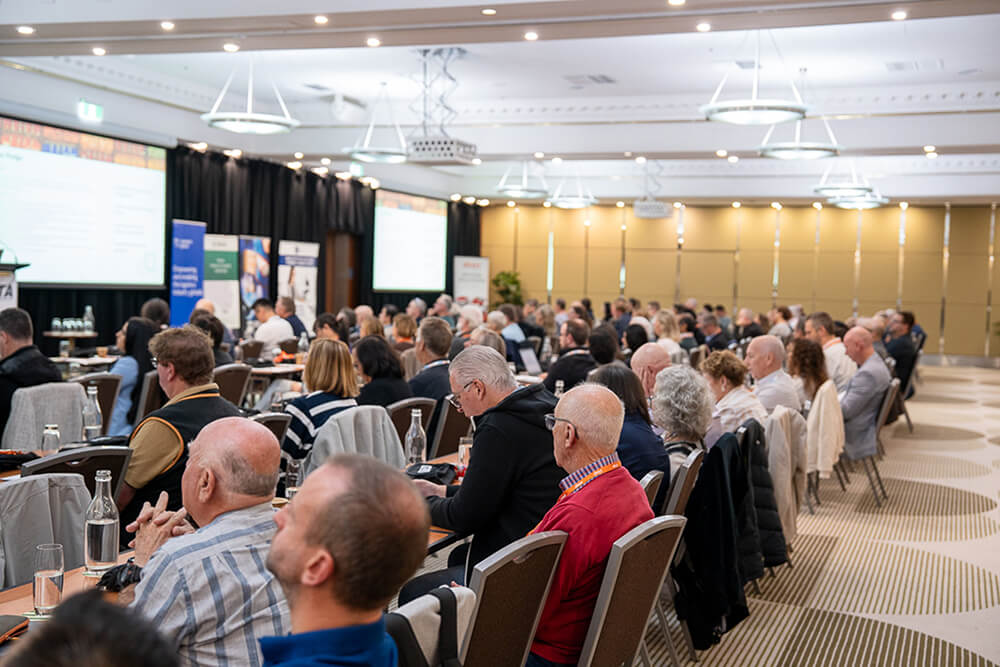
The Department of Agriculture, Fisheries and Forestry’s Biosecurity Operations Division presented at Freight Forwarder forums and Customs Broker Continuing Professional Development (CPD) events across Australia, providing updates on policy initiatives, STEPS updates, industry legislative responsibilities, Class 19 Approved Arrangement and imported food updates.

Biosecurity Snapshot: Responding to the Boom in Trade and Travel
August 2026
A recent DAFF article in Across Borders Annual Review explores the scale of this growth and how data-driven approaches are helping support efficient border processes while protecting Australia's environment, agricultural industries and way of life.

Helping industry prepare for biosecurity inspections
September 2026
The Department of Agriculture, Fisheries and Forestry is clarifying expectations under section 552 of the Biosecurity Act 2015 to support nationally consistent inspection practices and reinforce the shared responsibilities of industry and the department.
Broker toolkit
- Biosecurity Import Conditions system (BICON)
- Imported food
- External territories
- Specific commodities
- Applying for an approved arrangement
- Broker approved arrangements (class 19)
- Requirements and conditions for Non commodity for containerised cargo (NCCC)
- Requirements and conditions for Automatic entry processing for commodities (AEPCOMM)
- Compliance classifications for class 19 approved arrangements
- Approved commodities and related information for class 19.2 approved arrangement
- Automatic Entry Processing (AEP)
- Training and accreditation
- Continued Biosecurity Competency (CBC) activities
- Variations, revocations and change of details
- Fees and charges
- Imported food
- Pre border
- Brown marmorated stink bug (BMSB) treatment providers scheme
- Australian Fumigation Accreditation Scheme (AFAS)
- Ethylene oxide (ETO) offshore treatment providers scheme
- Gamma irradiation offshore treatment providers scheme & facilities
- Offshore cleaning and pre-inspection of used vehicles
- Sea container hygiene system
- Post border
- Approved Arrangement
- Biosecurity risk treatment guide
- Offshore schemes
- Offshore treatment providers
- Onshore treatment sites
- Sea container cleaning standards
- Waste
- Request to have import documents assessed outside business hours
- Imported food inspection scheme laboratory nomination form
- Movement advice for animal transport equipment
- Notification of container and break bulk discharge
- Reportable biosecurity incident form
- Request for inspection form
- Request for permission to dispose of goods/conveyance
- Acceptable documentation templates
- Booking an inspection
- Sites operating under an approved arrangement
- Cargo Container Verification (CCV)
- Fees
- Forms
- Be biosecurity aware - See. Secure. Report.
- How to import guide
- Cargo containers: biosecurity aspects and procedures
- Biosecurity treatments and fumigants
- Treatment providers
Our client service standards
As part of our commitment to continuous improvement in service delivery, we have established client service standards that outline the level of service you can expect from us.
Our performance report for client contact services, import services and export services provides a quarterly update of how we are performing against these standards.
Client service standard results: July 2025 to June 2026
If you have difficulty accessing these files, contact us for help.